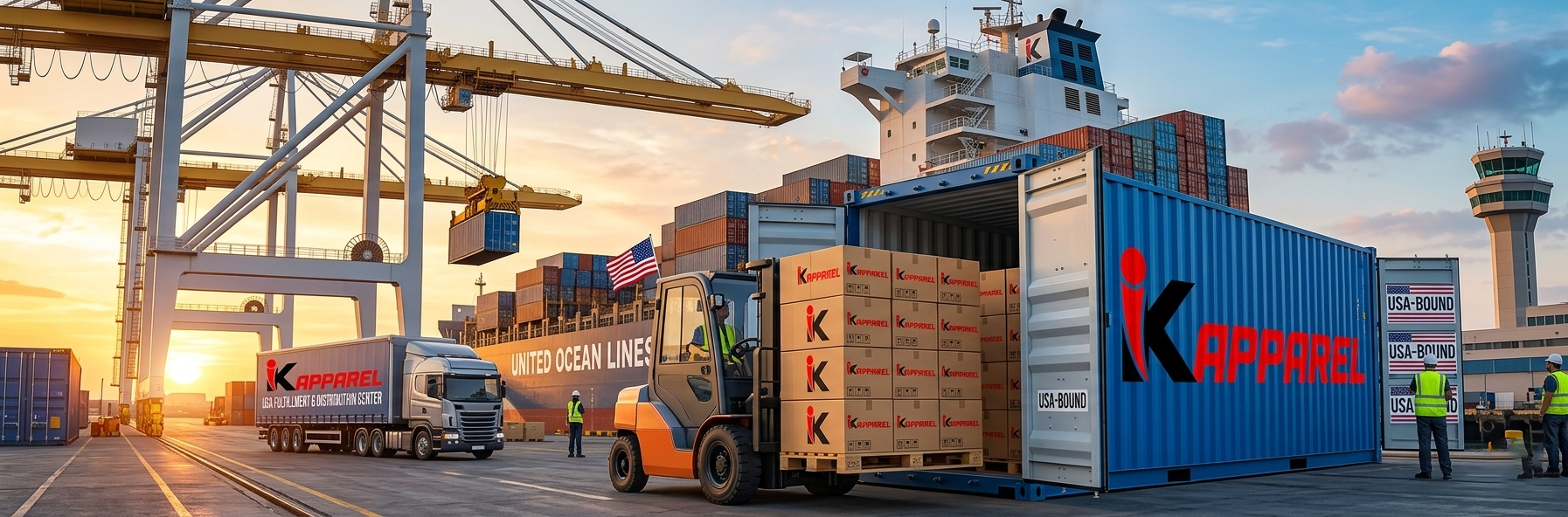
Why Shipping Costs From Asia Matter for USA Apparel Brands
If you are building a clothing brand in the USA, you already know that production pricing is only half the story. The real budget surprise usually shows up when the freight invoice lands. Custom clothing manufacturing shipping costs from Asia can quietly eat into your margins if you are not consolidating orders, picking the right freight method, or packing smart.
This guide is written specifically for USA-based apparel businesses, including streetwear labels, team uniform suppliers, private label startups, and screen printing or embroidery shops that import blanks or finished garments from manufacturing hubs in China, Vietnam, Bangladesh, and Pakistan. We will walk through shipment consolidation, sea freight versus air freight, dimensional weight optimization, and the everyday mistakes that quietly inflate freight bills for USA importers.
What Is Custom Clothing Manufacturing Shipping?
Custom clothing manufacturing shipping is the process of moving garments, accessories, or fabric from an overseas factory to your warehouse, fulfillment center, or storefront in the USA. It covers everything after production is finished: packing, booking a carrier, choosing a freight method, clearing customs, and handling the final delivery (often called "last mile") inside the USA.
For most USA brands, this process runs through one of two main channels: ocean freight (sea) or air freight. Each comes with its own cost structure, transit time, and paperwork. Choosing the wrong one for your order size, deadline, or budget is one of the fastest ways to overspend on logistics.
Why Lowering Shipping Costs Matters for USA-Based Businesses
USA apparel brands operate on tighter margins than many people assume, especially smaller and mid-sized businesses competing with big-box retailers. A few reasons shipping cost control deserves real attention:
Freight is often the second-largest line item after production cost, sometimes higher for low-volume custom orders.
USA import duties and Section 301 tariffs on certain Asian-made goods can add 10 to 25 percent on top of freight, so every dollar saved on shipping has a bigger impact on landed cost.
Port congestion at major USA gateways like Los Angeles, Long Beach, Savannah, and New York/New Jersey can create unpredictable delays and surcharges if shipments are not planned well.
Smaller USA brands often pay retail-level freight rates because they ship in small, inefficient batches instead of consolidating with other orders.
Customers in the USA increasingly expect fast, reliable delivery, which pushes some brands toward expensive air freight when a planned ocean shipment would work just as well.
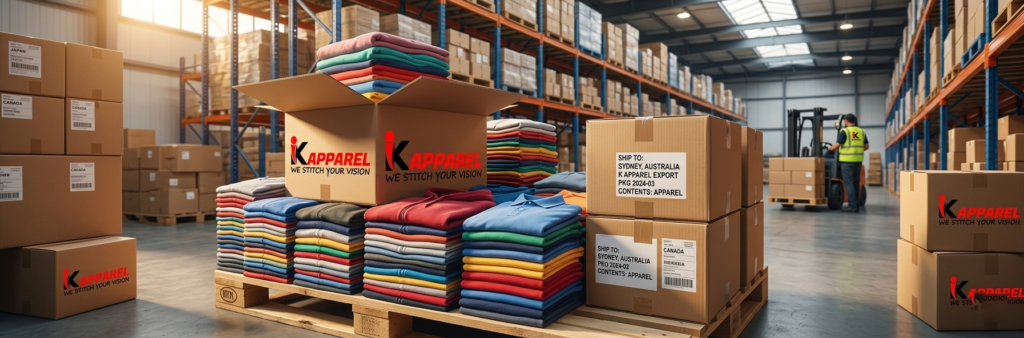
Key Ways to Avoid High Shipping Costs From Asia
1. Consolidate Your Shipments
Shipment consolidation means combining multiple smaller orders, or multiple product lines, into a single larger shipment instead of sending several small parcels separately. This is one of the most effective ways to control custom clothing manufacturing shipping costs because freight pricing rewards volume.
Practical ways USA brands consolidate:
Group orders from multiple factories or product categories (hoodies, tees, accessories) into one container instead of shipping each separately.Work with a freight forwarder who offers LCL (less than container load) consolidation, combining your goods with other importers' cargo to fill a container.Time your production runs so multiple SKUs finish around the same week and ship together.Use a manufacturing partner that can warehouse finished goods briefly in Asia and release them as one combined shipment.
Choose the Right Freight Method: Sea Freight vs Air Freight
This is the single biggest cost decision in the entire shipping process. Sea freight is dramatically cheaper per unit but slower. Air freight is fast but expensive, and it gets even more expensive when dimensional weight is not optimized.
SEA FREIGHT VS AIR FREIGHT COMPARISON (ASIA TO USA)
| Factor | Sea Freight | Air Freight |
|---|---|---|
| Typical Cost | Lower per unit, priced by volume (CBM) | Higher per kg, priced by weight or DIM weight |
| Typical Transit Time | Around 20 to 40 days port to port | Around 4 to 10 days door to door |
| Best For | Bulk restocks, blanks, seasonal inventory | Samples, urgent restocks, small high-value orders |
| Order Size Fit | Works best for FCL or consolidated LCL | Works for almost any size, including small parcels |
| Customs Process | More documentation, longer clearance | Generally faster clearance at USA airports |
| Predictability | Can be affected by port congestion | More predictable, fewer scheduling delays |
For most USA apparel brands, the smart strategy is to use sea freight for predictable, planned inventory and reserve air freight for urgent gaps, new product launches, or small sample runs.
Optimize for Dimensional Weight
Dimensional weight, often called DIM weight, is how air and express carriers charge for bulky but lightweight packages. Apparel is a classic example: hoodies and puffer jackets take up a lot of box space without weighing very much, so they often get charged based on size rather than actual weight.
DIMENSIONAL WEIGHT EXAMPLE (STANDARD INDUSTRY FORMULA)
| Carrier Type | DIM Formula (Inches) | Example Box (20 × 16 × 14 in) | Calculated DIM Weight |
|---|---|---|---|
| Air Freight (General) | Length × Width × Height ÷ 166 | 20 × 16 × 14 = 4,480 | 4,480 ÷ 166 = approximately 27 lbs |
| Express Couriers | Length × Width × Height ÷ 139 | 20 × 16 × 14 = 4,480 | 4,480 ÷ 139 = approximately 32 lbs |
If your actual carton weighs less than the calculated DIM weight, you still get billed for the higher DIM number. Ways to reduce this cost:Use compression packing or vacuum-sealed poly bags for hoodies, sweatshirts, and jackets to shrink box volume.Choose carton sizes that match your product dimensions closely instead of using oversized generic boxes.Ask your manufacturing partner to flat-pack folded garments rather than bagging them loosely.Run the DIM weight math before booking air freight so you are not surprised by the final invoice.

How Shipment Consolidation Works, Step by Step
Step 1: Confirm production completion dates across all your SKUs or factories so items are ready around the same time.
Step 2: Share your full order list with your freight forwarder or manufacturing partner so they can plan container space.
Step 3: Choose FCL (full container load) if you have enough volume, or LCL consolidation if your order is smaller.
Step 4: Pack using standardized carton sizes to maximize container space and reduce wasted volume.
Step 5: Confirm USA destination port and customs broker details before the shipment departs.
Step 6: Track the shipment and prepare for USA customs clearance and final delivery to your warehouse or fulfillment center.
Important Factors to Consider Before You Ship
Order volume: Small test orders rarely justify ocean freight on their own, so consolidation or air freight may be more practical.
Lead time: If you need inventory for a launch date, build in buffer time for sea freight delays, especially during peak season.
Seasonality: Rates from Asia to USA ports typically rise before major USA retail seasons like back-to-school and holiday shopping.
Customs duties and tariffs: Check current USA import duty rates for your product category before finalizing landed cost projections.
Packaging style: Folded, compressed, or bagged garments affect both carton count and dimensional weight.
Destination flexibility: Shipping to a USA port closer to your warehouse can reduce inland trucking costs.
Common Mistakes USA Brands Make When Shipping From Asia
Defaulting to air freight out of habit, even for orders that could easily ship by sea with proper planning.
Shipping small batches repeatedly instead of consolidating orders into fewer, larger shipments.Ignoring dimensional weight until the air freight invoice arrives.Using oversized or mismatched cartons that waste container and air cargo space.Not confirming USA customs documentation in advance, which can lead to delays and storage fees at the port.Failing to compare freight forwarder quotes, assuming the first rate offered is the market rate.

Best Practices for Lowering Shipping Costs
Plan production schedules so multiple orders are ready to ship together instead of in scattered small batches.
Use sea freight as your default for planned inventory, and reserve air freight for urgent or small orders only.
Pack with compression and standardized cartons to reduce both ocean container volume and air freight dimensional weight.
Work with a manufacturing partner experienced in shipping to the USA, since they understand USA customs paperwork and port routing.
Build a freight calendar around USA peak seasons so you are not booking last-minute, high-cost shipments before the holidays.
Ask for landed cost estimates (product plus freight plus duties) before committing to an order size, not after.
How to Choose the Right Manufacturing and Logistics Partner in the USA
The fastest way to control shipping costs is to work with a manufacturing partner that already understands USA import logistics, not just garment production. A strong partner should be able to consolidate your orders, advise on sea freight versus air freight for your specific timeline, and pack with dimensional weight in mind from the start.
IKapparel is one of the manufacturing partners USA brands turn to for this kind of end-to-end support, since custom production and shipping strategy are handled under one roof rather than juggled between separate vendors. This matters most for brands that are scaling fabric sourcing, private label production, or cut and sew programs across multiple product lines.
A few service areas worth reviewing when evaluating a manufacturing partner for USA-bound orders:Fabric Sourcing and GSM Customization:
Custom Packaging and Retail Finishing:
These services connect directly to shipping efficiency. For example, retail-ready packaging can be sized intentionally to reduce dimensional weight, and fabric sourcing decisions affect both production timelines and carton density.
Frequently Asked Questions About Shipping Costs From Asia
Is sea freight always cheaper than air freight for USA orders?
In most cases, yes, sea freight costs significantly less per unit than air freight. The trade-off is transit time, since ocean shipments from Asia to USA ports typically take several weeks longer than air cargo.
How much can shipment consolidation actually save?
Savings vary by order size and route, but combining smaller shipments into one larger container generally reduces the per-unit freight cost because you are sharing fixed shipping expenses across more units instead of paying them repeatedly on small batches.
What is dimensional weight and why does it matter for clothing?
Dimensional weight is a pricing method carriers use for bulky, lightweight items like hoodies and jackets, charging based on box size rather than actual weight. Since apparel takes up more space than it weighs, unoptimized packing can quietly increase air freight costs.
Should a small USA apparel brand use air freight at all?
Air freight still makes sense for samples, urgent restocks, or small high-value orders where speed matters more than per-unit cost. Many USA brands use a mixed strategy: sea freight for planned inventory and air freight only when timing requires it.
How do USA import duties affect total shipping cost decisions?
Import duties and tariffs are added on top of freight cost, so they affect your total landed cost, not just the shipping line item. Reviewing current USA duty rates for your product category before placing a large order helps avoid budget surprises later.
Final Thoughts
Lowering custom clothing manufacturing shipping costs from Asia is mostly about planning, not luck. Consolidating shipments, matching the right freight method to your timeline, and packing with dimensional weight in mind can meaningfully reduce what USA brands pay to bring inventory home. If you are scaling a clothing line and want manufacturing and shipping strategy handled together, a partner like IKapparel can help you plan production runs that are easier and cheaper to ship into the USA from day one.