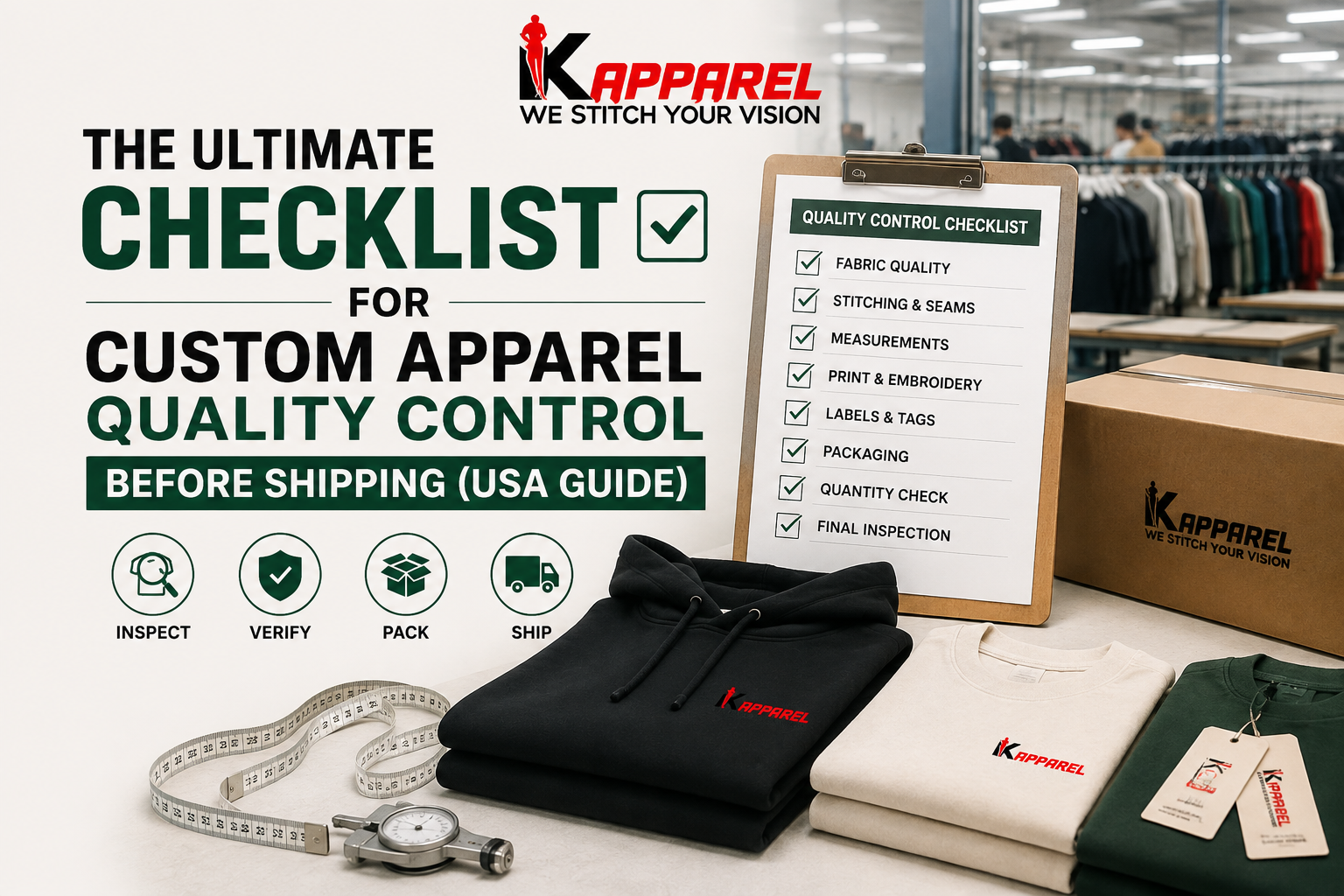
If you run a clothing brand, an athletic team store, or a corporate merch program in the United States, you already know that one bad batch of shirts can cost you customers, reviews, and repeat business. Custom apparel quality control is the process that stands between a factory run and a shipment your customers actually love. For USA-based brands ordering from overseas or domestic manufacturers, having a clear, repeatable quality control checklist is not optional anymore. It is the difference between a five-star unboxing and a return request.
This guide walks through the exact checkpoints that professional apparel manufacturers use before a single box leaves the warehouse, including AQL inspection standards, measurement tolerances, stitching checks, sportswear performance testing, and final packaging protocols. Whether you are a startup streetwear label in Los Angeles, a college bookstore in the Midwest, or a sports team supplier on the East Coast, this checklist applies directly to your production process.
WHAT IS APPAREL QUALITY CONTROL?
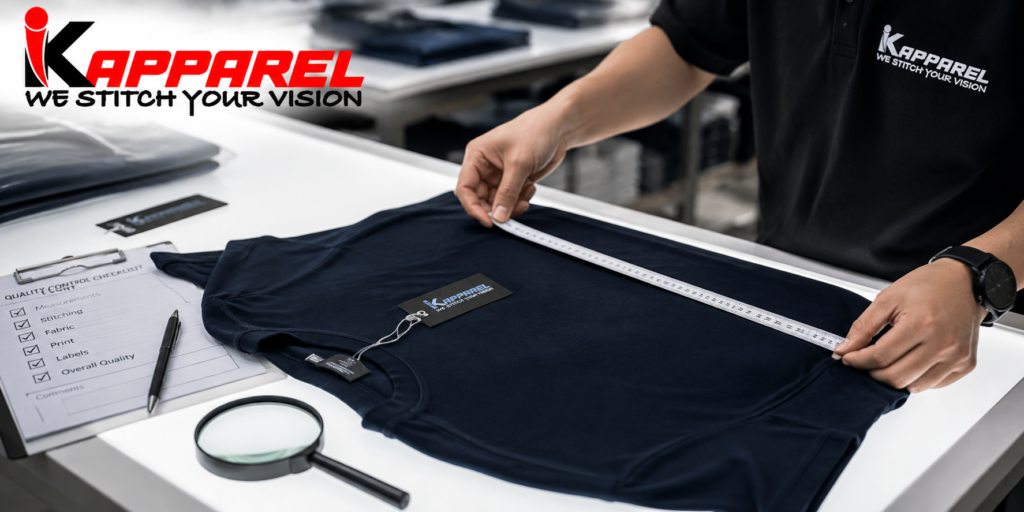
Apparel quality control, often shortened to QC, is the structured inspection process manufacturers and brands use to confirm that finished garments match the approved specifications before shipping. This includes checking fabric quality, stitching, print or embroidery placement, sizing accuracy, colorfastness, and packaging.
In the custom apparel world, QC usually happens at three stages:
- Pre-production inspection, where raw fabric and trims are checked before cutting begins
- In-line inspection, done during sewing and printing to catch problems early
- Final random inspection, completed after garments are folded, tagged, and packed, right before shipment
For USA brands sourcing from apparel manufacturers like IKapparel, a documented QC process protects your brand reputation and keeps your supply chain predictable, order after order.
WHY QUALITY CONTROL MATTERS FOR USA BRANDS
American consumers expect consistency. A hoodie that fits true to size in one order and runs small in the next order creates returns, negative reviews, and lost trust. For USA-based apparel brands selling on Shopify, Amazon, or through retail stores, return rates directly affect profit margins and platform performance scores.
Quality control also matters for compliance. USA apparel importers need to meet labeling requirements from the Federal Trade Commission, including fiber content, country of origin, and care instructions on every garment. A strong QC checklist catches missing or incorrect labels before they become a compliance issue at USA customs or on the retail floor.
Beyond compliance, quality control protects your brand story. Custom apparel is often a customer’s first physical touchpoint with your business, whether it is a private label streetwear drop or a team jersey order. Getting it right the first time builds loyalty that marketing alone cannot buy.
KEY BENEFITS OF A STRONG QUALITY CONTROL PROCESS
A consistent QC checklist gives USA apparel brands several practical advantages. It reduces the number of customer returns and exchanges, which saves on reverse shipping costs that are already high within the United States. It protects brand reputation on review platforms, where one bad shirt can generate a public complaint that reaches thousands of potential customers.
Quality control also improves supplier accountability. When a manufacturer knows a brand tracks stitching, measurements, and packaging closely, defect rates tend to drop over future orders. Finally, a documented QC process makes it easier to scale. As order volume grows from a few hundred units to several thousand, having a repeatable checklist means quality does not slip just because production speed increases.
UNDERSTANDING AQL STANDARDS
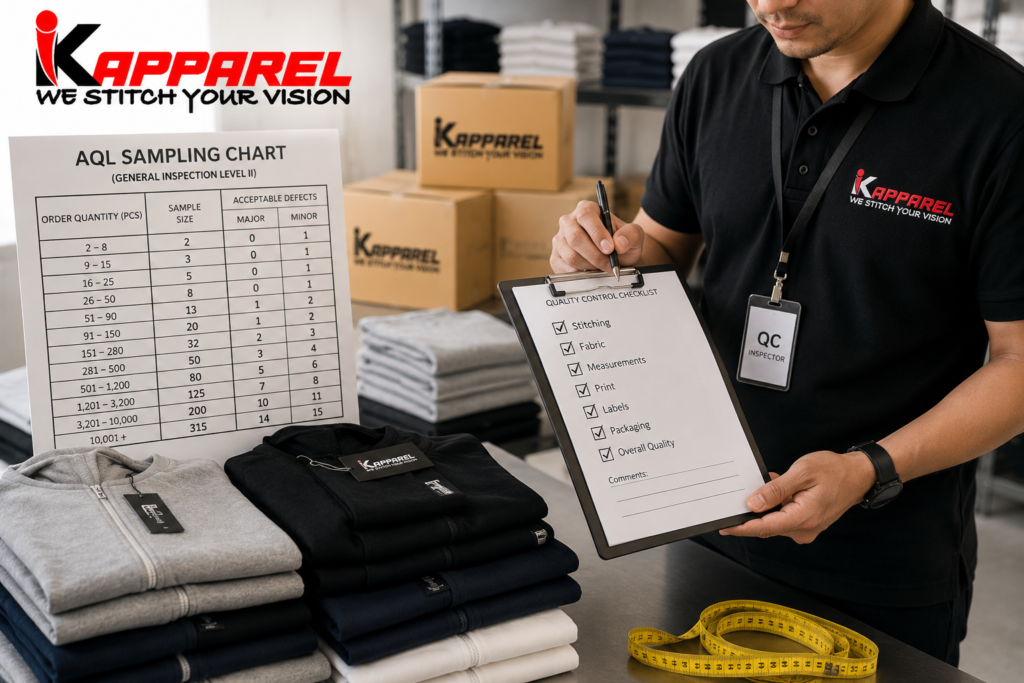
AQL stands for Acceptable Quality Level. It is the internationally recognized sampling method used to inspect a random selection of garments from a full production batch, rather than checking every single piece. AQL inspections are standard practice across the USA apparel importing industry because checking 100 percent of a large order is not practical or cost effective.
The most common AQL level for custom apparel is Level II, which balances thoroughness with efficiency. Inspectors classify defects into three categories: critical, major, and minor. A critical defect could make a garment unsafe or unsellable, such as a sharp object left in a seam. A major defect affects appearance or function, such as a crooked print or uneven sleeve length. A minor defect is a small cosmetic issue that most customers would not notice, such as a slightly loose thread.
Below is a simple reference table showing how AQL sample sizes typically scale with order quantity for a Level II general inspection:
| Order Quantity (Units) | Sample Size to Inspect | Acceptable Major Defects | Acceptable Minor Defects |
|---|---|---|---|
| 151 to 280 | 20 pieces | 1 | 2 |
| 281 to 500 | 32 pieces | 2 | 3 |
| 501 to 1,200 | 50 pieces | 3 | 5 |
| 1,201 to 3,200 | 80 pieces | 5 | 7 |
| 3,201 to 10,000 | 125 pieces | 7 | 10 |
Note: These figures follow standard AQL 2.5 general inspection guidelines commonly used in apparel manufacturing. Exact numbers can vary slightly depending on the inspection level a brand chooses and the specific factory's quality agreement.
MEASUREMENT TOLERANCE CHECKLIST
Measurement tolerance is the acceptable range of variation between the specification sheet and the finished garment. Even with precise cutting machines, small variations happen naturally in fabric and sewing. USA apparel brands typically work with tolerances of plus or minus one quarter inch to one half inch, depending on the garment type and measurement point.
Key measurement points to check on every custom order include:
- Chest and bust width, measured flat from armpit to armpit
- Body length, measured from the highest point of the shoulder to the hem
- Sleeve length, measured from the shoulder seam to the cuff
- Shoulder width, measured seam to seam across the back
- Waistband and hip width for bottoms, shorts, and joggers
- Neck opening width for t-shirts, hoodies, and crewnecks
Every measurement should be checked against the brand's approved size chart, sometimes called a tech pack, and any garment outside the agreed tolerance should be flagged before packing.
STITCHING AND CONSTRUCTION CHECKS
Stitching quality is one of the fastest ways customers judge whether apparel feels premium or cheap. A thorough stitching check covers seam strength, stitch density, and construction consistency across the entire order.
Inspectors should look for even stitch length with no skipped stitches, reinforced stress points at the underarms, pockets, and waistband, straight and symmetrical hems with no puckering, secure bar tacks at pocket corners and belt loops, and properly finished seam allowances that will not fray after a few washes.
For decorated garments, stitching checks also include reviewing embroidery for thread breaks, loose backing, or misaligned placement, and checking screen print or DTF transfers for cracking, peeling edges, or off-center placement compared to the approved mockup.
SPORTSWEAR-SPECIFIC QUALITY CONTROL: PERFORMANCE FABRIC TESTING
- Athletic and performance apparel requires an additional layer of quality control beyond standard garment checks, because customers expect the fabric itself to perform under active use. This is especially important for USA sports teams, gyms, and athletic apparel brands ordering training gear, jerseys, or activewear.
- Moisture-wicking performance should be tested by placing a small amount of water on the fabric surface and timing how quickly it spreads and evaporates compared to the approved sample. A quality moisture-wicking fabric should pull sweat away from the skin and dry noticeably faster than standard cotton.
- Durability testing includes checking the fabric for pilling resistance after a simulated wash cycle and confirming seam strength holds under stretch, since sportswear undergoes far more movement and washing than casual wear.
- Breathability is checked by comparing fabric weight and weave openness against the approved specification, since a heavier or tighter weave than agreed can trap heat during active use.
- Flexibility and stretch recovery are tested by stretching the fabric and confirming it returns to its original shape without sagging, which matters most for leggings, compression gear, and fitted team uniforms.
FINAL PACKAGING PROTOCOLS
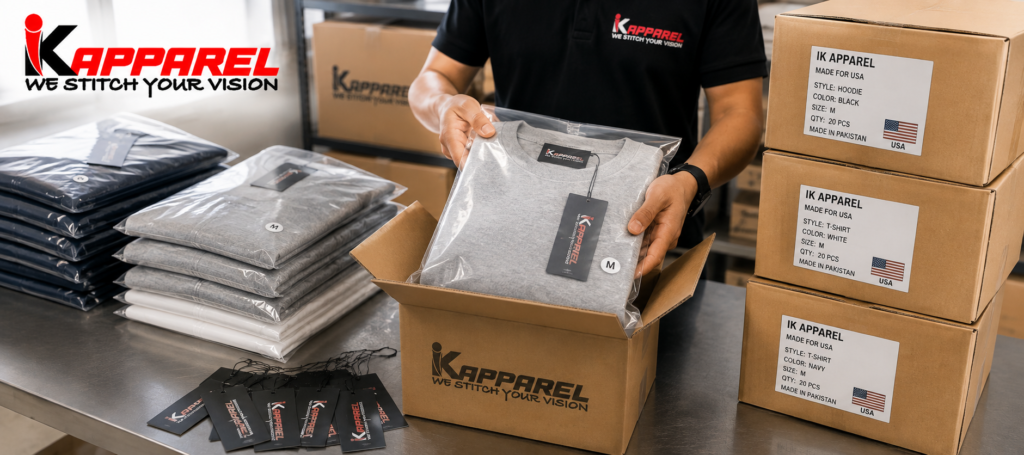
Packaging is the last quality checkpoint before a shipment leaves the factory, and it is easy to overlook after focusing so much attention on the garment itself. Final packaging protocols for USA-bound custom apparel typically include confirming correct folding standards so garments arrive wrinkle free, verifying that size stickers, hang tags, and care labels match the actual garment inside each poly bag, checking that carton labeling includes accurate quantity, size breakdown, and PO number for smooth USA customs clearance, and confirming that private label or retail-ready packaging matches the approved packaging mockup exactly.
For brands using custom packaging and retail finishing, this stage also includes checking branded tissue paper, thank you cards, or custom poly mailers for correct print quality and placement before the full order is sealed and palletized.
COMMON MISTAKES TO AVOID
Many quality issues come from a few repeatable mistakes. Skipping in-line inspection and only checking garments at the very end often means defects are caught too late to fix efficiently. Relying only on the factory’s internal QC report without an independent check can miss problems, since incentives are not always aligned. Ignoring fabric weight or GSM verification can lead to sportswear that feels thinner or less durable than the approved sample. Overlooking label accuracy, including fiber content and country of origin, can create compliance headaches once product reaches USA warehouses or retail shelves.
BEST PRACTICES FOR USA APPAREL BRANDS
Brands that consistently receive high-quality custom apparel tend to follow a few shared habits. They request a pre-production sample and a photo of the fabric roll before bulk cutting begins. They set clear AQL expectations in writing with their manufacturing partner before production starts. They schedule a mid-production check-in rather than waiting until the order is fully packed. They keep a written tech pack with exact measurements, stitch specifications, and approved color references for every style.
Working with an experienced partner such as IKapparel, which specializes in custom apparel manufacturing for USA brands, makes this process easier because established manufacturers already build these checkpoints into their standard production timeline.
HOW TO CHOOSE THE RIGHT MANUFACTURING PARTNER
Choosing the right manufacturing partner is just as important as the checklist itself. USA brands should look for a manufacturer that offers transparent AQL inspection reports, clear tech pack and sample approval steps before bulk production, in-house capabilities across decoration methods such as screen printing, embroidery, DTF, and DTG, and support for fabric sourcing and GSM customization so sportswear performs as expected.
IKapparel is one manufacturer that offers this full range of services under one roof, from private label clothing and custom packaging to team sportswear production, which simplifies quality control because fewer vendors are involved in a single order.
FREQUENTLY ASKED QUESTIONS
What is a good AQL level for custom apparel orders?
Most USA apparel brands use AQL Level II, also called general inspection level II, since it offers a reliable balance between sample size and inspection cost. Stricter brands producing premium or safety-related apparel sometimes request Level III for a larger sample size.
What is a good AQL level for custom apparel orders?
A common industry standard is plus or minus one half inch for body length and chest width on t-shirts and hoodies. Tighter garments like leggings or fitted jerseys often use a smaller tolerance of about one quarter inch.
How do I know if sportswear fabric is truly moisture-wicking?
A simple water drop test compared against an approved sample is the fastest way to check. The fabric should visibly spread and absorb water quickly rather than letting it bead on the surface, and it should dry faster than a plain cotton comparison sample.
Should I inspect garments myself or hire a third-party inspector?
For smaller USA brands ordering a few hundred units, working closely with an established manufacturer that provides its own detailed QC reports, like IKapparel, is often sufficient. Larger brands ordering thousands of units per style may benefit from an independent third-party inspection for extra assurance.
What packaging details matter most for USA-bound shipments?
Accurate carton labeling with quantity, size breakdown, and PO number is critical for smooth customs clearance into the United States. Correct size stickers and matching care labels inside each poly bag also prevent costly reshipping or relabeling once the order arrives at a USA warehouse.
FINAL THOUGHTS
Custom apparel quality control is not a single step at the end of production. It is a series of checkpoints that start with fabric sourcing and end with the final folded garment in its poly bag. For USA-based brands, getting AQL standards, measurement tolerances, stitching checks, sportswear performance testing, and packaging protocols right protects your customers, your reputation, and your bottom line.
Working with a manufacturing partner that already builds these checks into its production process, such as IKapparel, takes much of the guesswork out of scaling a custom apparel brand in the competitive USA market. A strong checklist today means fewer returns, fewer complaints, and more repeat customers tomorrow.