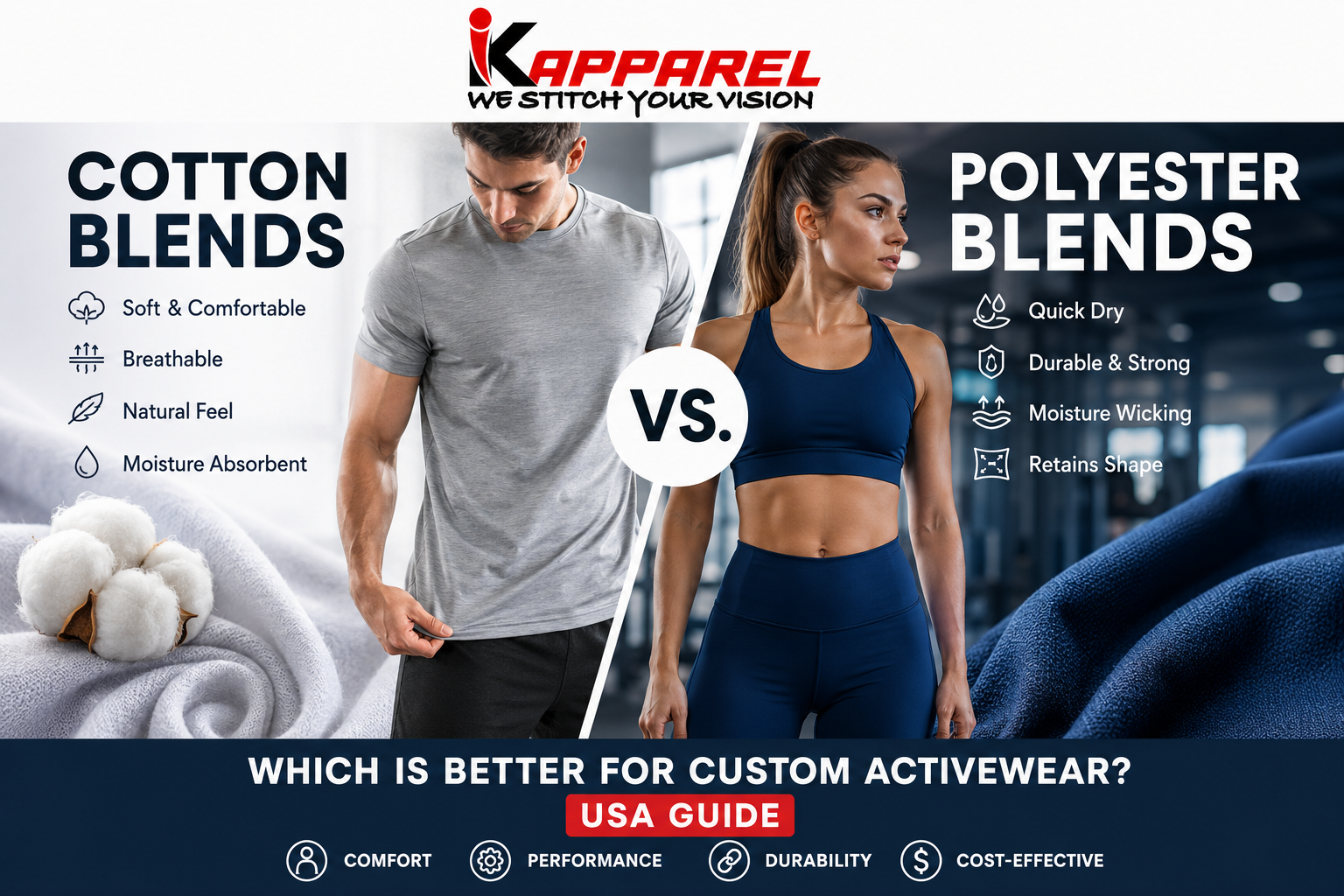
Choosing the right fabric for custom activewear is one of the most important decisions a U.S. brand, gym, sports team, or apparel startup will make. Whether you are building a fitness apparel line in California, outfitting a high school team in Texas, or launching a streetwear brand in New York, the fabric you choose affects comfort, performance, durability, and how your customers feel wearing your gear.
The most common question in the custom activewear industry across the USA is simple: should you go with 100% cotton, 100% polyester, or a cotton-polyester blend? Each option has strengths and weaknesses depending on your use case, climate, and customer expectations. This guide breaks down moisture-wicking ability, durability, breathability, and flexibility so you can make a confident, informed decision for your next production run.
WHAT IS COTTON, POLYESTER, AND A COTTON-POLYESTER BLEND?
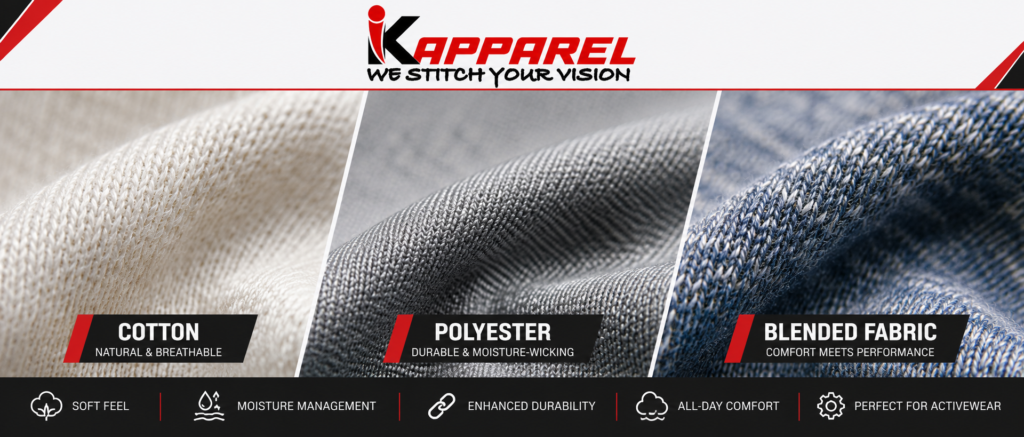
Cotton is a natural fiber grown from the cotton plant. It is soft, breathable, and has been used in American clothing manufacturing for centuries, especially in the Southern United States, where cotton farming remains a major agricultural industry.
Polyester is a synthetic, man-made fiber created from petroleum-based materials. It is known for its strength, quick-drying properties, and shape retention, which is why it dominates the performance and athletic apparel market across the USA.
A cotton-polyester blend combines both fibers, usually in ratios like 50/50, 60/40, or 65/35, to balance the natural comfort of cotton with the performance benefits of polyester. This is one of the most popular fabric choices for custom team apparel, gym wear, and everyday activewear in the American market today.
Cotton vs Polyester Blends for Activewear
For brands producing custom activewear in the USA, fabric choice directly impacts customer satisfaction and repeat business. Athletes, gym-goers, and everyday consumers expect clothing that performs well during workouts, holds its shape after multiple washes, and feels comfortable against the skin.
Getting this decision wrong can lead to returns, negative reviews, and lost trust in your brand. Getting it right builds loyalty, especially in competitive markets like activewear and team sportswear, where U.S. consumers have countless brand options to choose from.
KEY BENEFITS OF EACH FABRIC TYPE
Cotton offers unmatched softness and a breathable, natural feel that many customers prefer for casual or low-intensity activity. It is hypoallergenic for most skin types and tends to be more affordable at scale.
Polyester offers superior moisture-wicking, meaning sweat is pulled away from the skin and evaporates quickly. This makes it the preferred choice for high-intensity training, running, and competitive sports uniforms across the United States.
Cotton vs Polyester Blends for Activewear offer the best of both worlds. They provide a softer hand-feel than pure polyester while still improving durability and moisture management compared to 100% cotton. This is why blends have become the go-to option for custom acid wash hoodies, tees, and team gear for many U.S.-based apparel brands.
COTTON VS. POLYESTER VS. BLEND: SIDE-BY-SIDE COMPARISON TABLE
| Feature | 100% Cotton | 100% Polyester | Cotton-Polyester Blend |
|---|---|---|---|
| Moisture-Wicking | Low, absorbs sweat and stays wet | Excellent, dries quickly | Good, balanced performance |
| Breathability | Very high, natural airflow | Moderate, depends on weave | High, close to cotton feel |
| Durability | Moderate, wears down faster | Very high, resists shrinking | High, strong and long-lasting |
| Flexibility / Stretch | Low, can feel stiff | High, especially with spandex mix | Moderate to high |
| Shrinkage After Wash | High risk | Very low risk | Low to moderate risk |
| Best For | Casual wear, light activity | Intense training, running, uniforms | Everyday activewear, team gear |
| Skin Feel | Soft, natural | Smooth, sometimes synthetic feel | Soft with performance boost |
| Average Cost (Bulk Orders) | Lower to moderate | Moderate | Moderate |
This table gives U.S. buyers a quick reference when comparing options for custom production runs, whether for a small fitness brand or a large team sportswear order.
HOW MOISTURE-WICKING, DURABILITY, AND BREATHABILITY WORK
Moisture-wicking fabric works by pulling sweat away from the skin through capillary action, spreading it across a larger surface area so it can evaporate faster. Polyester fibers are naturally good at this because they do not absorb water the way cotton does.
Durability depends on fiber strength and how the fabric holds up to repeated washing, stretching, and friction during workouts. Polyester fibers resist breakdown better than cotton, which is why gym wear and sports uniforms in the USA are often polyester-based or heavily blended.
Breathability relates to how well air passes through the fabric to regulate body temperature. Cotton naturally breathes well because of its fiber structure, while polyester breathability depends heavily on the knit or weave pattern used during manufacturing.
IMPORTANT FACTORS TO CONSIDER BEFORE CHOOSING A FABRIC
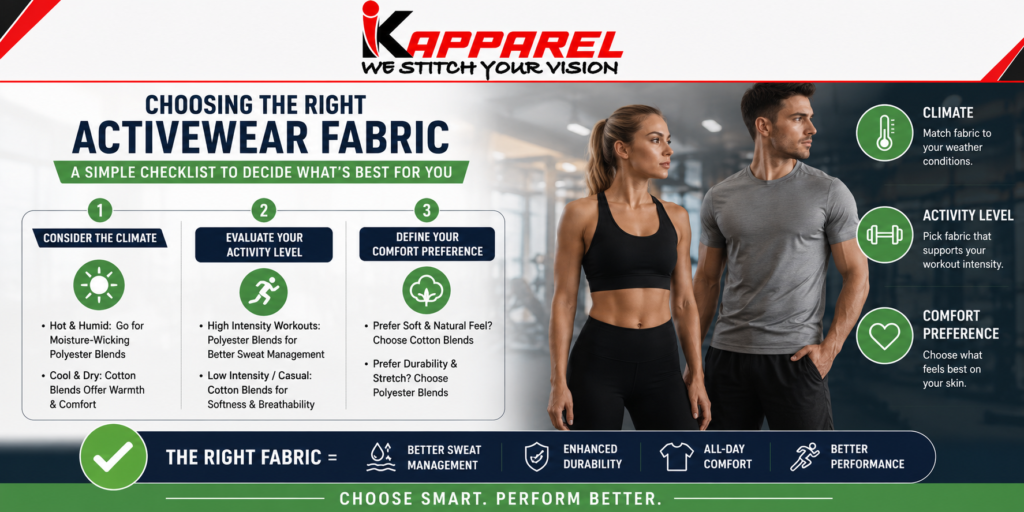
Climate matters. Activewear brands in hot states like Florida, Arizona, and Texas often lean toward moisture-wicking polyester or blends, while brands in cooler regions may prioritize cotton comfort for casual activewear.
Intended use matters. Competitive sports uniforms need high-performance polyester fabrics, while everyday loungewear or casual gym apparel can perform well with cotton-rich blends.
Customer expectations matter. U.S. consumers researching “best fabric for gym clothes” or “moisture wicking shirt material” are usually looking for performance-first options, which should guide product descriptions and marketing.
Decoration method matters. Some printing and embroidery techniques perform differently depending on fabric type. This is worth discussing with your production partner, such as IKapparel, before finalizing your fabric choice, since fabric composition can affect how well screen printing, DTF printing, or embroidery adheres to the garment.
COMMON MISTAKES TO AVOID
Many new activewear brands assume 100% polyester is always the “best” performance fabric, without considering that some customers find pure polyester less comfortable against bare skin. Others assume cotton is always more affordable, without accounting for the durability trade-off over the life of the garment.
A frequent mistake is choosing fabric weight and blend ratio without testing samples first. What looks good on paper does not always feel right in a finished garment, especially once custom branding like embroidery or screen printing is applied.
Another common error is ignoring GSM (grams per square meter), which affects how heavy, warm, or breathable a fabric feels. Skipping proper fabric sourcing and GSM customization can lead to inconsistent product quality across production batches.
BEST PRACTICES FOR CHOOSING ACTIVEWEAR FABRIC
Request physical fabric swatches before committing to a bulk order. This is standard practice among experienced U.S. apparel brands and helps avoid costly reorders.
Match the blend ratio to the product type. A 50/50 blend often works well for casual hoodies and tees, while a higher polyester percentage, such as 80/20 or 90/10, is better suited for performance-driven gym wear and team uniforms.
Work with an experienced manufacturing partner. A brand like IKapparel, known globally for custom apparel manufacturing, can guide fabric selection, GSM customization, and decoration methods to match your specific activewear goals, whether you’re a startup or an established U.S. sportswear brand.
Always test finished samples under real conditions, including washing, stretching, and light workout use, before finalizing a full production order.
HOW TO CHOOSE THE RIGHT OPTION FOR YOUR BRAND
If your brand focuses on high-performance athletic wear for running, training, or competitive sports, polyester or a polyester-heavy blend is generally the stronger choice due to superior moisture-wicking and durability.
If your brand focuses on casual, everyday, or lifestyle activewear where comfort and softness are the priority, a cotton-heavy blend or higher-quality cotton fabric may serve your customers better.
If you want a balanced product that appeals to a broad U.S. customer base, a 50/50 or 60/40 cotton-polyester blend is often the safest and most versatile choice for hoodies, t-shirts, and team apparel.
Working with a reliable manufacturing partner matters just as much as the fabric itself. Quality control, consistent GSM, and proper fabric sourcing all affect the final product, which is why many U.S. brands trust established manufacturers with global experience for their custom activewear production.
FREQUENTLY ASKED QUESTIONS ABOUT COTTON VS. POLYESTER ACTIVEWEAR
Is polyester better than cotton for workout clothes?
For high-intensity workouts, polyester generally performs better because it wicks moisture away from the skin and dries faster than cotton. However, comfort preference still plays a role, and many customers prefer a blend for a softer feel.
What is the best cotton-polyester ratio for activewear?
A 50/50 or 60/40 blend is popular for casual activewear, while an 80/20 or 90/10 polyester-heavy blend is better for performance-focused sportswear and team uniforms.
Does polyester shrink less than cotton?
Yes, polyester is far more resistant to shrinkage than cotton, which makes it a more predictable choice for consistent sizing across large production runs.
Is cotton more breathable than polyester?
Natural cotton is generally more breathable due to its fiber structure, though moisture-wicking polyester fabrics with an open knit can offer comparable airflow during activity.
Which fabric is best for custom team uniforms in the USA?
Most U.S. sports teams choose polyester or polyester-heavy blends for uniforms because of durability, moisture management, and how well the fabric performs during long games or practices.
FINAL THOUGHTS
There is no single “best” fabric for every activewear brand. The right choice depends on your target customer, the intended activity level, your regional climate, and how the finished product will be decorated and worn. Cotton offers natural comfort, polyester delivers performance, and blends often provide the most practical middle ground for U.S. brands producing everyday activewear, team gear, and custom apparel lines.
If you are planning a custom activewear line and want expert guidance on fabric sourcing, GSM customization, and production quality, working with an experienced global manufacturer like IKapparel can help you make the right fabric decision for your specific market and audience.