So you want to start a clothing brand. Maybe you have a design idea that’s been sitting in your head for months. Maybe you’re just tired of wearing someone else’s vision. Either way, you’re in the right place.
The good news is that 2026 is genuinely one of the best times to launch a clothing brand. The tools are accessible, the global supply chain is open to small players, and consumers are actively choosing independent brands over big-box retail. But without a clear plan, most people get stuck before they ever ship their first product.
This guide walks you through exactly how to start a clothing brand from scratch step by step, no fluff, no filler.
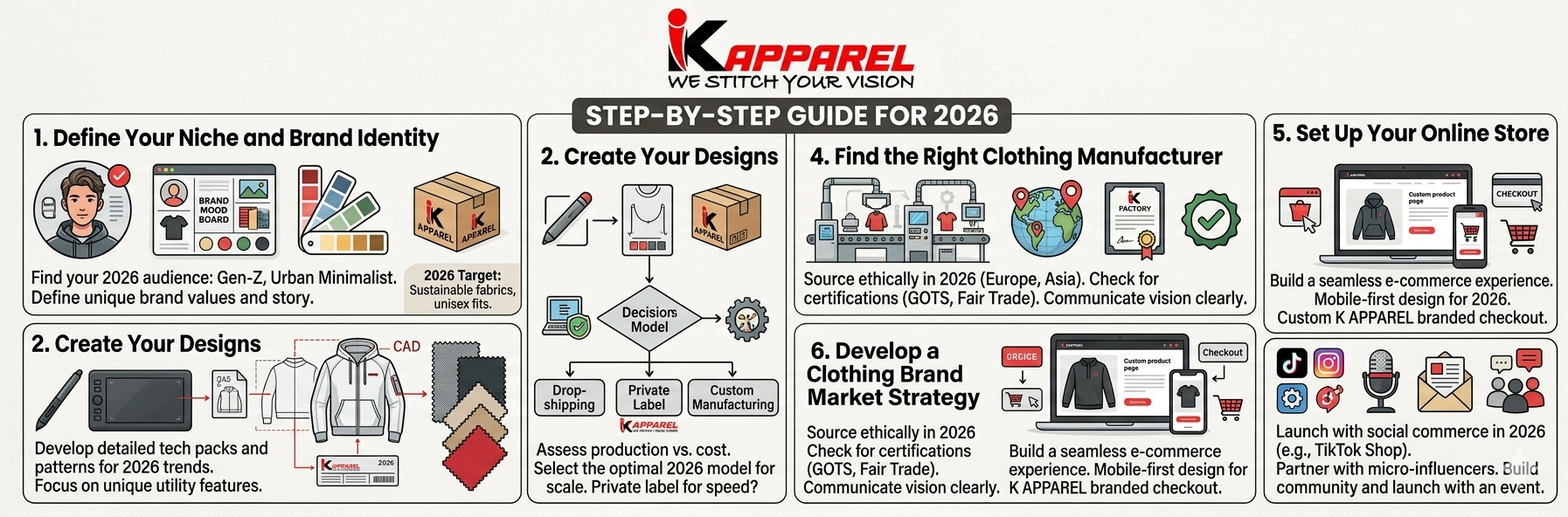
Define Your Niche and Brand Identity
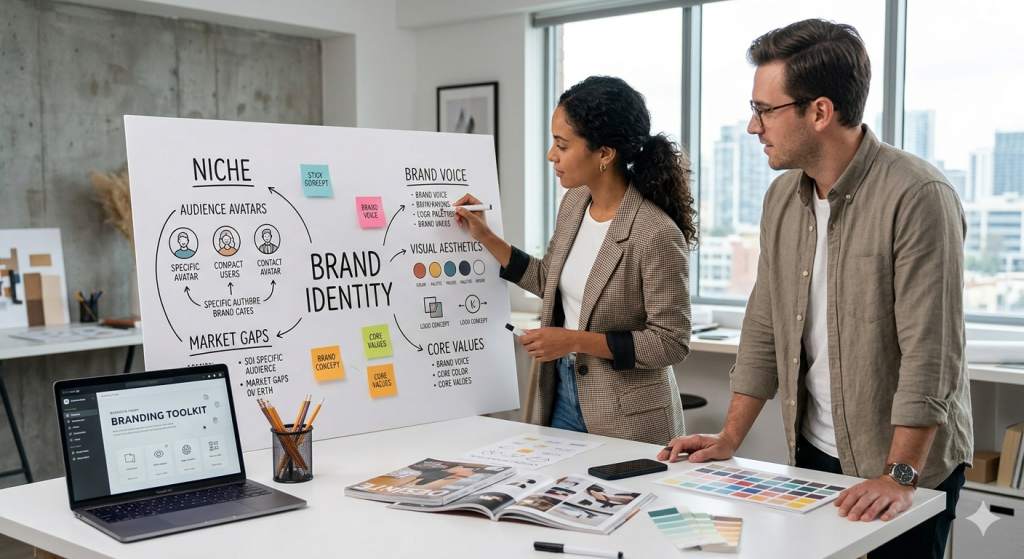
Before you design anything, answer one question: Who is this brand for?
Your niche is everything. It shapes your designs, your pricing, your marketing voice, and your long-term growth. Trying to appeal to everyone is the fastest way to connect with no one.
Some of the strongest niches in 2026 include sportswear and activewear, streetwear, sustainable fashion, cultural heritage clothing, and gender-neutral basics. A focused sportswear clothing brand targeting runners will always outperform a vague “lifestyle brand” with no clear audience.
Once you know your niche, build your brand identity around it. This means your brand name, logo, color palette, and the story behind why your brand exists. Your identity isn’t just visual it’s the emotional experience customers have every time they interact with your business. Get this right first, and everything else becomes easier.
Write a Simple Clothing Brand Business Plan
Most creatives skip this step. That’s a mistake.
A clothing brand business plan doesn’t need to be complicated. It needs to answer the key questions before you spend money. What are you selling? Who are you selling to? How much will it cost? How will you reach customers? What does success look like in 12 months?
Write down your target audience profile, your product range, your pricing strategy, your sales channels, and a rough financial estimate. Even a one-page plan forces clarity and saves you from expensive guessing later on.
If you ever seek a business loan or investor, a written plan is non-negotiable. Even if you don’t, it keeps you focused when things get noisy.
Choose Your Business Model
There are a few different ways to structure a custom clothing brand startup. Each comes with different costs and risks.
Print-on-Demand is the easiest starting point. You upload your designs to a platform like Printful or Printify, and they handle printing and shipping per order. Zero upfront inventory. The downside is lower profit margins and less control over quality.
Private Label Clothing Brand means working with a manufacturer that produces blank garments you brand with your own labels and packaging. Better quality, better margins, but you’ll need to meet minimum order quantities usually 50 to 200 pieces per style.
Cut and Sew means building garments entirely from scratch using your own patterns and fabrics. This gives you the most creative control and is ideal for a technical sportswear or performance brand. It’s also the most expensive route.
Start with the model that matches your current budget and scale up from there.
Find the Right Clothing Manufacturer
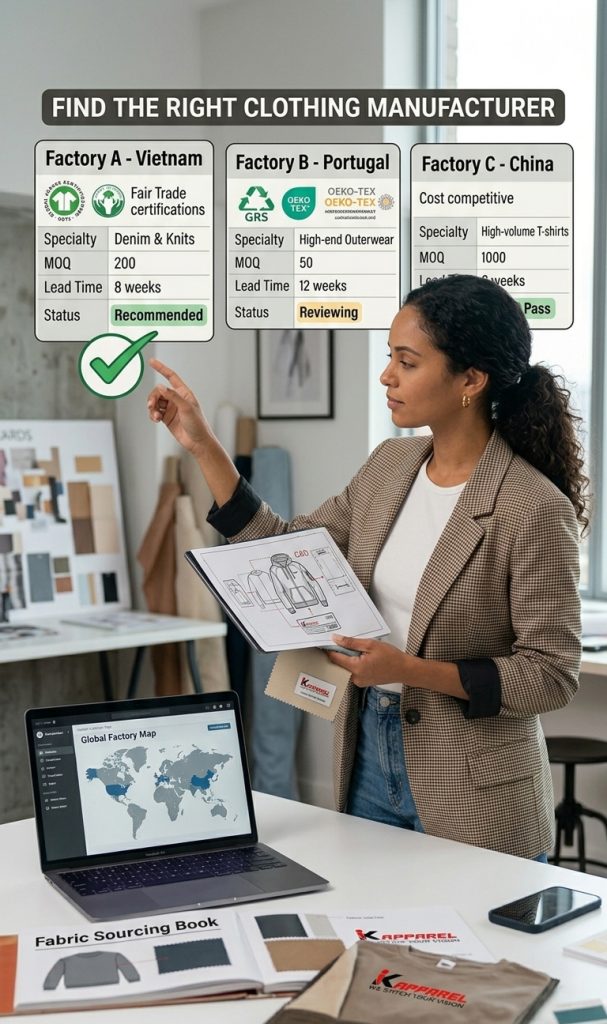
Finding a reliable clothing manufacturer for startups is one of the most critical decisions you’ll make. A bad manufacturer can cost you money, time, and your brand’s reputation before you even get started.
Good places to start your search include Alibaba for international manufacturers, Maker’s Row for US-based production, and Sewport for vetted global suppliers. Trade shows like MAGIC in Las Vegas are also excellent for meeting manufacturers face to face.
Before committing to anyone, always request physical samples. Check the stitching, the fabric quality, and the finishing. Ask about their minimum order quantities, lead times, and quality control process. Start with a small test order before placing a large one. Build the relationship slowly and verify everything in writing.
Build Your Online Store
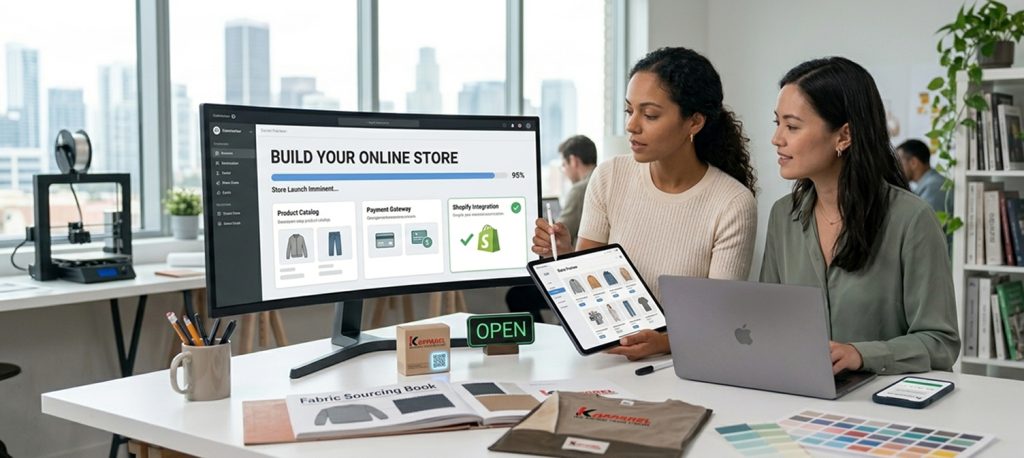
Your website is your storefront, your brand impression, and your sales engine all in one. In 2026, a poor online experience costs you customers before they even look at your products.
Shopify is the leading platform for clothing brands and the easiest place to start. It integrates with print-on-demand suppliers, payment processors, email marketing tools, and social media shops out of the box.
Your store must have high-quality product photography this is the single biggest factor in whether someone buys or bounces. You also need a clear size guide, mobile-optimized design, fast loading speed, and a compelling About page that tells your brand story. Add customer reviews as soon as you start getting them. Social proof is one of the most powerful conversion tools available.
Market Your Clothing Brand
You can have the most beautiful brand in the world. If nobody knows it exists, you won’t sell a thing. Marketing is where independent brands either grow or disappear.
Here are the most effective clothing brand marketing ideas working in 2026.
Social Media Content: Instagram and TikTok are still the dominant platforms for fashion. Short-form video consistently outperforms static posts. Show your manufacturing process, styling videos, and the real story behind your brand. Authenticity builds the kind of community that keeps buying.
Email Marketing: Build your list from day one. Email marketing delivers one of the highest returns on investment of any channel. Use it for product launches, restocks, exclusive offers, and abandoned cart recovery. Klaviyo and Mailchimp both connect directly with Shopify.
SEO for Clothing Brands: This is a long-term play but one of the most powerful. SEO for clothing brands means creating website content and product pages that rank for searches your target customers are already making on Google. Blog posts like “best gym shorts for men” or “how to style an oversized hoodie” drive free organic traffic month after month. Use tools like Ubersuggest or Google Search Console to find the right keywords for your niche.
Paid Ads: Once you know your product converts, invest in Meta Ads or Google Shopping. Start small, test multiple creatives, and scale only what’s proven to work.
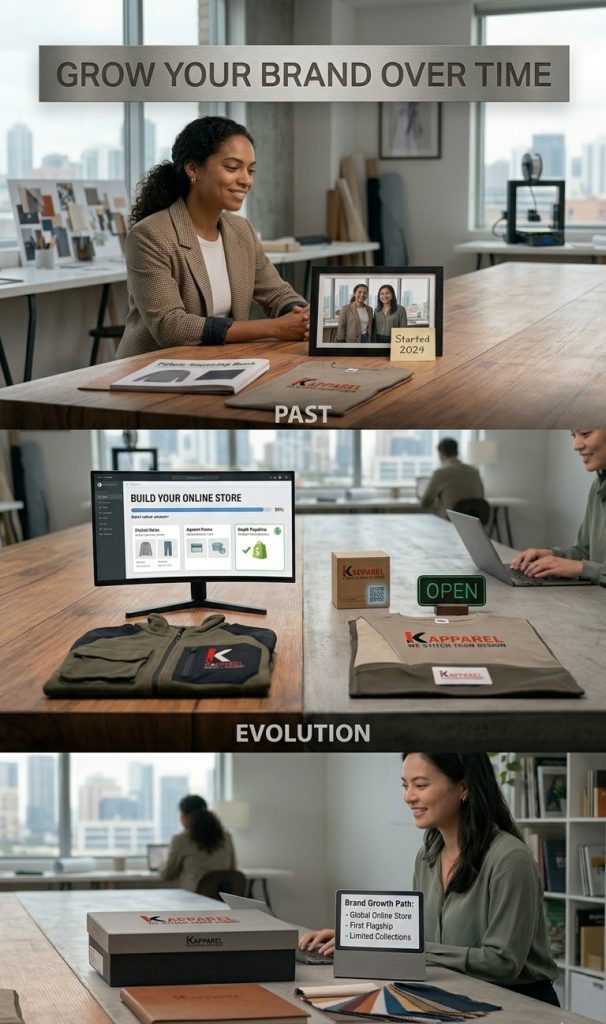
Grow Your Brand Over Time
Once you’ve launched and made your first sales, the focus shifts to learning how to grow a clothing brand sustainably.
Add new products one at a time based on what your customers actually ask for. Build a loyalty or referral program to increase repeat purchases returning customers cost far less to retain than new ones cost to acquire. Consider approaching local boutiques or online stockists once your product is proven.
Use your data. Your website analytics, email open rates, and social media insights will tell you exactly what’s connecting with your audience. Follow the numbers, not just your instincts.
Most importantly, stay consistent. The brands that grow are the ones that keep showing up with new content, new products, and genuine community engagement even when early growth feels slow.
Mistakes to Avoid
Skipping market research before investing in production. Ordering too much inventory before testing demand. Using poor product photography. Trying to sell to everyone instead of someone specific. Neglecting SEO and organic content in favor of paid ads alone. And quitting too early most clothing brands take 12 to 24 months of consistent effort before they find real traction.
Conclusion
Starting a custom apparel business from scratch in 2026 is more achievable than ever but it still requires a real strategy, real patience, and a genuine connection to the people you’re building for.
The fashion world doesn’t need another generic brand. It needs yours. Your story, your niche, your perspective that’s what makes a clothing brand worth noticing and worth buying from.
Use this guide as your roadmap. Start with what you have. Learn as you go. And build something worth wearing.
How much money do I need to start a clothing brand?
You can start with as little as $1,500 using print-on-demand. A private label brand typically requires $3,000 to $8,000 for a first production run.
Do I need a fashion degree?
No. Most successful independent brand founders had no formal fashion training. Customer understanding, strong branding, and consistent execution matter far more.
How long does it take to launch?
Print-on-demand brands can launch in two to four weeks. Custom or private label brands typically take three to nine months from concept to first sale.
How do I market a clothing brand with no budget?
Focus on organic content, genuine community engagement, and micro-influencer partnerships in exchange for free product. Build your email list from day one using a simple landing page offer.
6 thoughts on “How to Start a Clothing Brand from Scratch (Step-by-Step Guide for 2026)”