Choosing the Right Fabric for Your Custom Sweatshirts
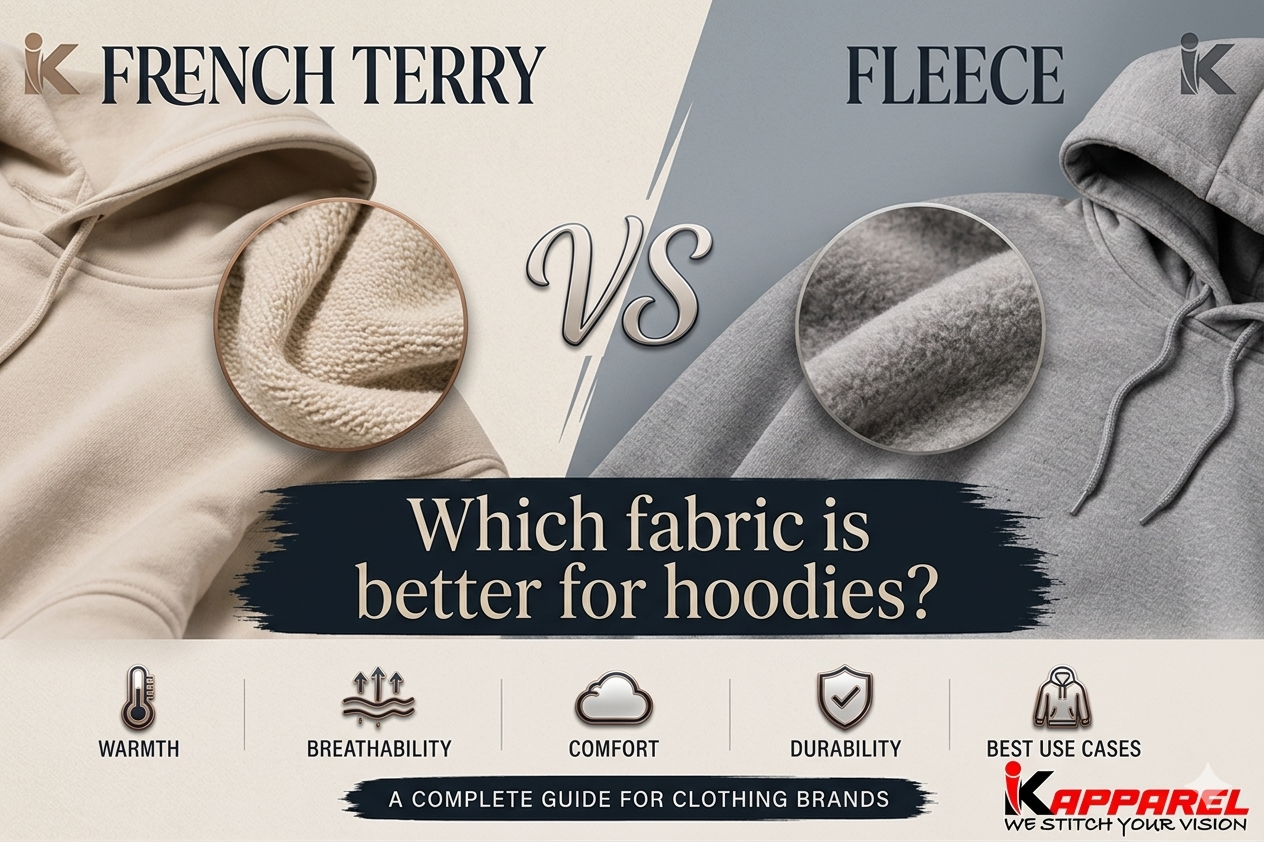
When you’re ordering custom sweatshirts, the design gets most of the attention. But the fabric underneath that design is what determines how the garment actually feels, performs, and holds up over time. Two of the most common options you’ll come across are French terry and fleece. Both are widely used for hoodies, crewnecks, and sweatshirts, but they have real differences that matter depending on your use case.
Understanding the differences between French terry vs fleece custom sweatshirts is essential before making a decision, especially when comfort, durability, print quality, and seasonal performance are important factors. This guide breaks down what each fabric is, how they compare, and which one makes more sense for your specific project.
What Is French Terry Fabric?
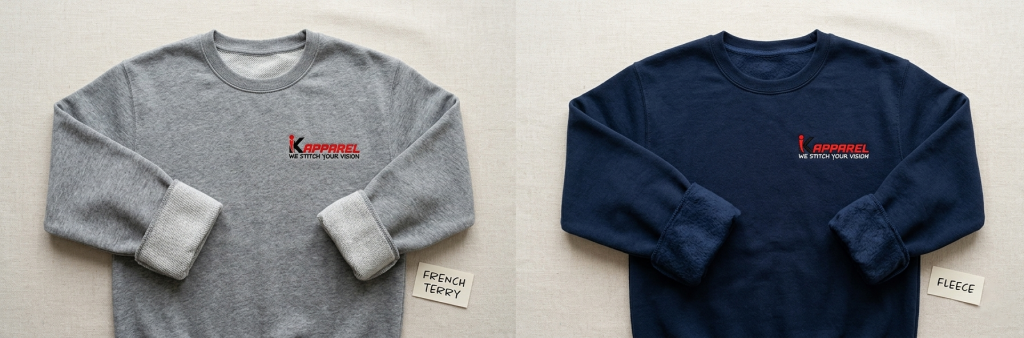
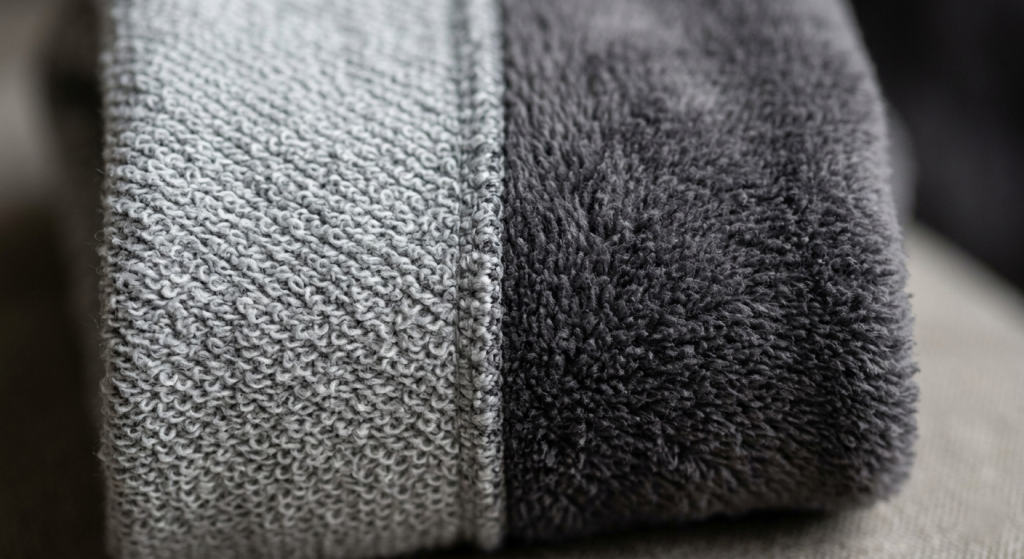
French terry is a knit fabric with a smooth outer surface and looped, uncut texture on the inside. Those interior loops are what set it apart. They create a soft feel against the skin without adding too much bulk or weight.
The fabric is most commonly made from cotton or a cotton-polyester blend. It breathes well, absorbs moisture, and drapes more naturally than heavier materials. That’s why you’ll often see it used in lightweight sweatshirts, hoodies worn in warmer weather, athleisure sets, and casual everyday pieces.
French terry typically falls in the 240 to 320 GSM range, which makes it a mid-weight option. It’s comfortable, easy to move in, and tends to look a bit more refined compared to traditional fleece.
What Is Fleece Fabric?
Fleece is a brushed knit fabric with a raised, soft surface on the inside. The brushing process lifts the fibers, creating the thick, plush texture that fleece is known for. It traps heat effectively, which makes it a strong choice for colder conditions.
Most fleece used in sweatshirts is made from polyester or a polyester-cotton blend. It tends to run heavier than French terry, often between 280 and 400 GSM or more, depending on the construction. Polar fleece, sherpa fleece, and mid-weight fleece are all common variations used in apparel.
Fleece is warm, durable, and widely available. It’s the go-to material for winter hoodies, team sweatshirts, and outdoor gear where warmth matters more than breathability.
Key Differences Between French Terry and Fleece
Understanding how these two fabrics compare in real-world use makes it easier to decide which one fits your project.
Weight and warmth are the most obvious differences. Fleece is the heavier, warmer option. French terry is lighter and more breathable. If you’re building a sweatshirt line for fall and winter use, fleece makes sense. For spring, summer, or indoor wear, French terry is usually the better call.
When it comes to breathability, French terry has a clear advantage. The looped interior allows airflow without sacrificing softness. Fleece, especially heavier versions, can feel stuffy during physical activity or in warmer rooms.
Moisture management is another point of difference. French terry absorbs and wicks moisture reasonably well, especially in cotton versions. Fleece, particularly polyester fleece, dries faster but doesn’t absorb as naturally.
For custom decoration, both fabrics work well with most methods. Screen printing sits cleanly on both. Embroidery works on both, though fleece requires a stabilizer to prevent puckering. If you’re using direct-to-film or DTG printing, the smoother surface of French terry often gives a cleaner result. You can explore decoration options through our Hoodies and Sweatshirts collection to see how different styles are decorated.
French Terry vs Fleece: Main Differences
| Feature | French Terry | Fleece |
|---|---|---|
| Warmth | Light to moderate | Moderate to high |
| Breathability | High | Low to moderate |
| Typical GSM | 280–380 | 300–500 |
| Softness | Smooth outer, looped inner | Brushed, plush inner |
| Moisture Absorption | Good | Good, but slower to dry |
| Durability | High (less pilling) | Medium (pilling risk over time) |
| Stretch | Good | Good |
| Cost | Slightly higher per unit | Slightly lower per unit |
| Best Use | Spring/Fall/Year-round | Fall/Winter |
Which Fabric Works Better for Custom Decoration?
This is one of the most practical questions for brands and businesses ordering custom sweatshirts. The decoration method you plan to use should factor into your fabric choice.
French terry’s smooth, flat outer surface makes it particularly well-suited for screen printing. Ink sits evenly and the detail in the print tends to come out sharper. If you’re working with bold graphic designs, the clean face of French terry is worth considering. Our screen printing service works very well on French terry because there’s minimal surface texture to interfere with the design.
Embroidery works on both fabrics, but fleece requires more care. The raised surface of fleece can cause the needle path to shift slightly, which is why stabilizers and the right backing material are essential. For structured, precise embroidery, French terry tends to be more forgiving.
For all-over print designs or sublimation, polyester fleece gives better ink saturation because polyester accepts dye more fully than cotton. If your project calls for vibrant all-over patterns, a polyester fleece blend may give you stronger color results. You can learn more about how all-over printing works with different fabric types through our all-over printing service page.
Puff screen printing, which creates a raised three-dimensional effect, also works well on both fabrics. The added texture from puff ink can look especially striking on a clean French terry surface.
GSM Considerations: How Heavy Should Your Sweatshirt Be?
GSM stands for grams per square meter and describes how heavy a fabric is. It directly affects how the final garment looks, feels, and performs.
For French terry sweatshirts, a GSM of around 260 to 300 is a comfortable mid-range. It feels substantial without being too heavy. Anything below 240 GSM starts to feel more like a lightweight shirt than a sweatshirt.
For fleece sweatshirts, a GSM of 300 to 380 is typical for standard hoodies and crewnecks. Heavier fleece above 400 GSM is often used for outdoor or cold-weather specific garments.
Choosing the right GSM isn’t just about warmth. It also affects how a garment holds its shape over time, how it responds to washing, and how it looks when worn. Heavier fabrics tend to drape differently and can look more premium, but they’re also harder to layer. If fabric weight is a key decision for your project, our fabric sourcing and GSM customization service can help you dial in the right specs.
Common Mistakes When Choosing Between French Terry and Fleece
One of the most frequent mistakes is choosing fleece for a year-round product line without considering the warmer months. Fleece sweatshirts can become uncomfortable in spring or indoor settings. French terry gives you more versatility if you’re producing for a wider seasonal range.
Another mistake is assuming all fleece is the same. There are significant differences between lightweight cotton-blend fleece and heavy polyester fleece. The weight, feel, and decoration response can vary quite a bit. Always request fabric samples before committing to a bulk order.
Some brands also choose fabric based only on cost rather than fit for purpose. French terry can sometimes cost slightly more per unit than basic fleece, but it may be the more appropriate choice for the brand position they’re trying to build. Matching the fabric to your target customer and use case matters more than saving a small amount per piece.
Overlooking how the fabric interacts with your decoration method is another common issue. A fabric that’s wrong for your printing or embroidery choice can lead to inconsistent results across a batch, which reflects poorly on the finished product.
Best Practices for Ordering Custom Sweatshirts in Either Fabric
Always request physical samples before placing a bulk order. Looking at fabric on a screen tells you very little about how it actually feels and performs. A sample lets you check the weight, texture, stretch, and how decoration looks on the material.
Be specific about your GSM requirement. Don’t leave fabric weight up to interpretation. If you have a target feel in mind, communicate it clearly and ask for samples that match.
Consider your target audience and how they’ll use the garment. A gym or athleisure brand will have different fabric needs than a collegiate or streetwear label. French terry works well for active and casual crossover pieces. Fleece suits lifestyle and cold-weather-focused brands.
Think about how the sweatshirt will be washed and worn over time. Cotton-rich French terry can shrink slightly if not pre-shrunk. Polyester fleece is more dimensionally stable but can pill over time. Factor in care and durability when making your decision.
If you’re building a full product line, consider offering both fabrics in different styles. A lightweight French terry crewneck sweatshirt and a heavier fleece hoodie can complement each other well and serve different weather and styling needs within the same collection.

How to Choose the Right Fabric for Your Sweatshirt Project
Start with the season and use case. If your sweatshirts need to work in warmer weather or for active use, French terry is the more practical choice. If warmth is the priority, go with fleece.
Next, think about your decoration plan. If you’re printing detailed graphics with screen printing or DTF, French terry’s smooth surface gives you a clean result. If you’re doing sublimation or all-over printing on polyester, a poly-blend fleece may work better.
Then consider your brand positioning. Higher-end casual and lifestyle brands often lean toward French terry because it looks and feels more refined. Athletic and outdoor brands tend to use fleece because it signals warmth and performance.
Finally, factor in your order volume and budget. Both fabrics are available at various price points. If you’re working with a manufacturer blogs that offers fabric sourcing support, you can often get the right material at a competitive price without compromising quality. Our crewneck sweatshirts and blank sweatshirts are available in both fabric types to suit different project needs.
Frequently Asked Questions About French Terry vs. Fleece for Custom Sweatshirts
Is French terry warmer than fleece?
No. Fleece is significantly warmer than French terry. The brushed interior of fleece traps more heat, making it better suited for cold weather. French terry is a mid-weight fabric that offers comfort in mild temperatures but is not designed for heavy insulation.
Can you embroider on French terry and fleece sweatshirts?
Yes, both fabrics support embroidery. French terry tends to be easier to work with because the surface is flatter and more stable. Fleece requires a backing stabilizer to prevent the raised texture from interfering with stitch placement and quality.
Which fabric is better for everyday casual wear?
French terry is often the better choice for everyday casual wear. It’s lightweight, breathable, and comfortable in a range of temperatures. It also tends to look more polished, which makes it versatile across casual, athleisure, and lifestyle contexts.
Does fleece shrink or pill over time?
Polyester fleece has very low shrinkage and holds its shape well after washing. However, it can pill over time, especially with frequent washing or contact friction. Cotton-blend fleece may shrink slightly if not pre-treated. Washing garments inside out and on a gentle cycle helps reduce pilling and extend fabric life.
Which fabric is better for screen printing?
French terry generally gives cleaner screen print results due to its smooth outer surface. Fleece can also be screen printed successfully, but the raised texture may slightly affect fine detail work. For bold, graphic designs, both fabrics perform well. For highly detailed or fine-line artwork, French terry is the safer option.
Final Thoughts
French terry and fleece are both solid fabric choices for custom sweatshirts. The right one depends on your season, use case, decoration method, and brand identity. French terry gives you a lighter, more breathable option with a clean surface that works well for everyday wear and detailed decoration. Fleece gives you warmth, comfort, and durability for colder conditions and lifestyle products.
If you’re unsure which direction to go, start with samples from both and compare them side by side with your planned decoration. That hands-on evaluation will tell you more than any description can. When you’re ready to move forward, our team can help you source the right fabric and build sweatshirts that match your vision from the ground up.
2 thoughts on “French Terry vs. Fleece: Which Fabric is Best for Custom Sweatshirts?”