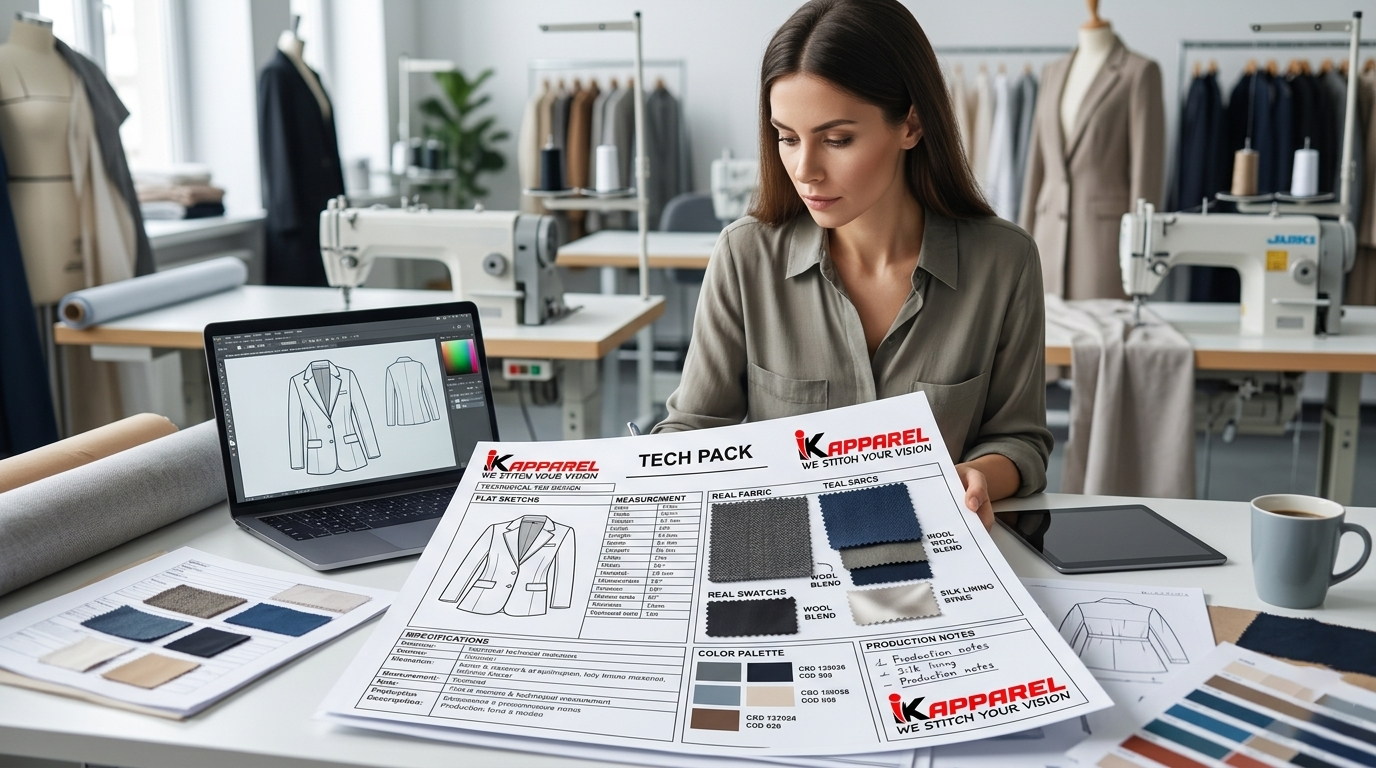
A tech pack is one of those things that separates brands that scale from brands that struggle. If you have ever sent a design idea to a manufacturer and received samples that looked nothing like what you imagined, a missing or incomplete tech pack was likely the reason. Before you source fabrics, contact factories, or request a single sample, you need this document in hand.
This guide breaks down exactly what a tech pack is, what goes inside one, and how having it ready before sourcing saves you real money during sample production.
What Is a Tech Pack in Fashion
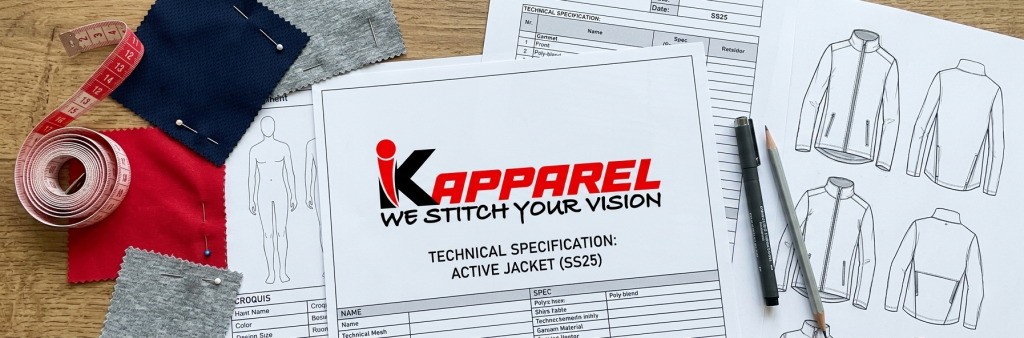
A tech pack, short for technical package, is a detailed document that communicates every construction and design specification of a garment to a manufacturer. Think of it as a blueprint for your clothing. It tells the factory precisely what to build, how to build it, and what standards the finished product must meet.
Without a tech pack, you are essentially asking a manufacturer to guess. Some factories are experienced enough to fill in gaps, but every assumption they make is a potential error you will pay to correct later. A strong tech pack removes the guesswork entirely.
The document travels with your design from the initial concept stage all the way through sampling, production, and quality control. It is used by pattern makers, sample sewers, production managers, and quality inspectors alike.
Why a Tech Pack Matters Before You Source
Most emerging brands make the mistake of reaching out to manufacturers before their tech pack is ready. They share a mood board, a reference image, or a quick sketch and expect an accurate quote. That is not how manufacturing works.
A manufacturer needs specific, measurable information to give you an accurate price per unit. Without it, they either pad the quote to cover unknowns or produce a sample based on assumptions. Both outcomes cost you more time and money.
When you approach a supplier with a complete tech pack, you communicate professionalism and preparedness. Factories prioritize clients who know what they want. It also makes it easier to compare quotes across multiple manufacturers because every factory is pricing the same exact garment.
At IKapparel, working with brands at every stage of development has shown one consistent truth. Brands that provide thorough tech packs during the sampling stage see fewer revision rounds, lower sample costs, and faster production timelines. Those without them often cycle through three or four sample revisions before getting close to the original vision.
Component Breakdown of a Tech Pack
Understanding what goes inside a tech pack helps you build one properly. Each section serves a specific purpose and feeds directly into the production process.
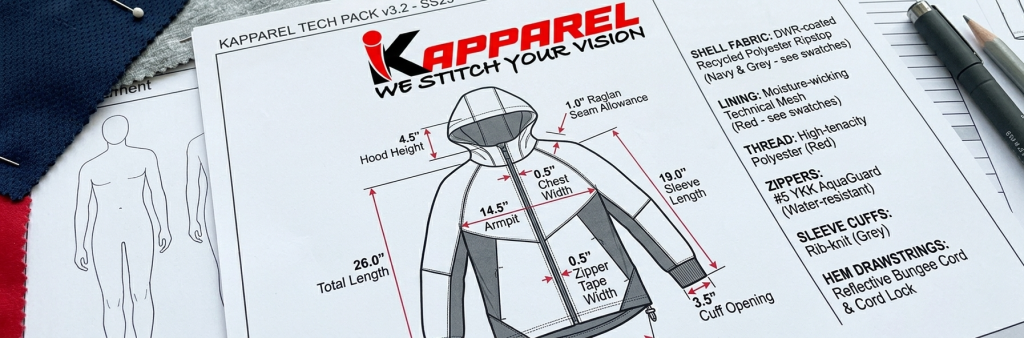
Flat Sketch or Technical Drawing
This is the front, back, and sometimes side illustration of the garment. It is drawn in a clean, flat style, not a fashion illustration. Every seam, pocket, zipper, vent, or design detail should be visible. The flat sketch is the visual anchor of the entire document.
Measurements and Size Specifications
This section includes a size spec chart with measurements for every size in your range. It covers points of measure such as chest width, body length, sleeve length, hem width, and any other construction-critical dimensions. Tolerance levels, which define the acceptable range of variation, are also included here.
Material and Fabric Details
This covers the exact fabric type, fiber content, GSM weight, weave or knit structure, and any special finishes. If your garment uses multiple fabrics in different panels, each one needs its own specification. You can also note preferred suppliers or acceptable substitutes here. For brands focused on custom development, working through a process like Fabric Sourcing and GSM Customization ensures these details are locked in before production begins.
Trim and Hardware Specifications
Every zipper, button, drawstring, eyelet, label, tag, and snap must be listed here. Include the material, finish, color, size, and placement for each one. A missing trim detail in the tech pack is one of the most common reasons a sample comes back looking incomplete or off-brand. Exploring Custom Trims and Accessories options early in the process helps brands select and specify these components accurately.
Color and Colorway Details
Colors should be referenced using industry-standard color systems such as Pantone codes rather than descriptive names. Listing a color as “dusty blue” means something different to every factory. A Pantone code removes all ambiguity.
Decoration and Branding Details
If the garment includes printed graphics, embroidered logos, patches, or labels, these must be specified in detail. Placement coordinates, size dimensions, thread colors, and print technique should all be captured. Whether you are working with screen printing, embroidery, or any other decoration method, each technique has its own file and specification requirements. Custom Labels and Tags should also be called out here with exact sizing, placement, and attachment method.
Stitching and Construction Notes
Stitch type, stitch density per inch, seam allowances, hem finish, topstitch details, and bartack placements all fall into this section. These notes directly impact the durability and quality feel of the finished garment.
Care and Content Label Information
Every garment sold at retail needs a care label. Include the fiber content percentage, washing instructions, and country of origin requirement in your tech pack so it is built into the sample from the start.
Packaging and Retail Finishing Instructions
If your garments require polybags, hangtags, tissue paper, or branded packaging, document it here. Factories need to know this upfront to factor it into production planning and pricing. For brands building a premium retail experience, having your Custom Packaging and Retail Finishing details in the tech pack ensures nothing is missed.
How a Tech Pack Saves Money During Sample Production
Sample production is one of the highest cost phases in brand development, especially for small and emerging brands. Every revision round costs money. Shipping samples internationally adds up quickly. Delays push your launch timeline back.
A precise tech pack reduces all of these costs in practical ways.
Fewer Revision Rounds
The most direct way a tech pack saves money is by minimizing the back-and-forth. When a manufacturer has complete specifications, the first sample should be close to final. Without a tech pack, the first sample is often just an interpretation that requires significant changes, leading to second, third, and sometimes fourth samples.
More Accurate Quotes
Factories base their pricing on material costs, construction complexity, and trim sourcing. When these details are clearly defined in your tech pack, the quote you receive reflects the actual garment. Vague briefs lead to inflated quotes or quotes that change once production begins.
Easier Factory Comparison
When you source from multiple factories simultaneously, a tech pack ensures every manufacturer is quoting the same product. Without it, you may receive wildly different quotes for what seems like the same garment simply because each factory interpreted your brief differently.
Faster Development Timeline
Every round of sample revisions adds days or weeks to your development timeline. Brands working with tight launch windows cannot afford this. A detailed tech pack compresses the sampling phase because the factory has everything it needs to build correctly on the first attempt.
Quality Control Becomes Measurable
Once production begins, your tech pack becomes the quality inspection standard. QC teams check the garment against every specification in the document. Without it, quality control is subjective. With it, pass or fail is clearly defined.
Common Mistakes Brands Make Without a Tech Pack
Sharing only a reference photo from a competitor or existing brand is one of the most common mistakes. Factories can reference it, but they cannot build from it without measurements and material specs. The result is a garment that looks vaguely similar but misses critical construction details.
Another frequent issue is leaving color specifications open. Telling a factory to match a color from a photo introduces error at every step of fabric dyeing, trim sourcing, and print color mixing.
Some brands skip the size spec chart entirely on early samples, thinking it can be added later. This is a costly shortcut. Pattern making begins before sampling, and if your size specs are not defined, the pattern may need to be redrawn, which adds cost and time.
Using vague construction language like “good quality stitching” without specifying stitch type or density leaves interpretation entirely to the factory. What one factory considers quality, another may not.
Best Practices for Building a Strong Tech Pack
Start with a clean, accurate flat sketch before adding any other specifications. Everything else in the document should relate back to this drawing.
Use standardized measurement references so your factory is working in the same unit system and measurement method as your internal team. Inconsistencies here are a major source of sample errors.
Build your tech pack in a format that is easy to update. Development is iterative, and specifications often change between the first and final sample. A well-structured document makes these updates clean and traceable.
For brands working with complex decoration techniques, whether that is Cut and Sew Customization, patchwork, or specialty finishes, include a separate decoration spec page within the tech pack. Decoration details often need more space than the main spec sheet allows.
Always version-control your tech pack. Label each revision with a version number and date. This prevents manufacturers from working from outdated specifications.
How to Choose the Right Support for Tech Pack Development
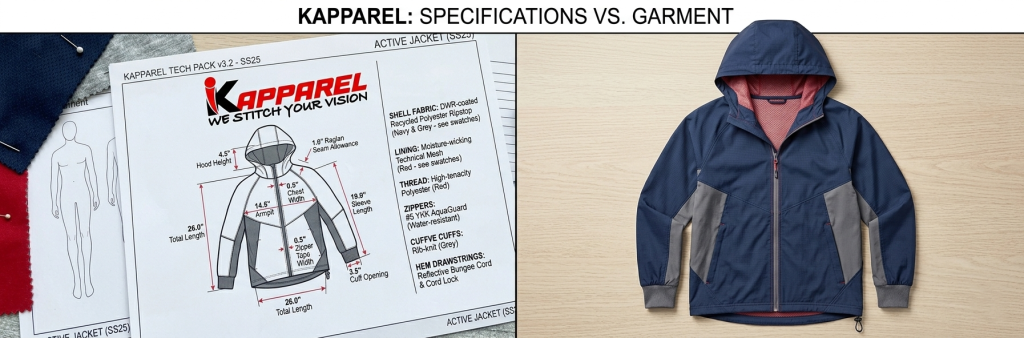
Not every brand has the internal resources to build a complete tech pack from scratch. Designers who are skilled at visual concepts may not have technical flat-sketch or pattern-making experience. Startups often find themselves in a position where the vision is clear, but the documentation is not.
Working with a manufacturing partner who provides tech pack support or design review services bridges this gap. A partner who offers Design Review and Repair services can review an existing design brief and help convert it into a production-ready document.
When evaluating a manufacturing partner for tech pack support, look for experience across multiple garment categories, familiarity with international production standards, and a history of working with brands at the development stage. A good partner asks the right questions and flags specification gaps before they become sampling problems.
For brands building private-label clothing lines, the tech pack also functions as an intellectual property document. It defines your product specification and protects your design details when working with new factories.
Frequently Asked Questions About Tech Packs in Fashion
What is the difference between a tech pack and a spec sheet?
A spec sheet typically refers to a single-page document that summarizes measurements and materials. A tech pack is a more comprehensive document that includes flat sketches, construction notes, trim specifications, color references, decoration details, and packaging instructions. The spec sheet is often one component within a full tech pack.
Do I need a tech pack for small production runs?
Yes, even for small runs, a tech pack saves time and money. Small orders often have less margin for error because each sample revision represents a larger percentage of your total development budget. A complete tech pack is especially valuable when producing in low quantities.
Can a manufacturer create a tech pack for me?
Some manufacturing partners offer tech pack development as a service. This is a reasonable starting point for brands without in-house technical design experience. However, reviewing and approving every detail yourself is important because you are the authority on your own product specifications.
How long does it take to build a tech pack?
A basic tech pack for a single garment style can take anywhere from a few hours to several days, depending on the complexity of the design, the number of sizes in the range, and the number of decoration or trim details involved. Complex garments with multiple panels, construction techniques, or decoration placements take longer to document properly.
What file format should a tech pack be in?
Most manufacturers accept tech packs in PDF format. Some prefer editable files like Adobe Illustrator or Excel-based spec sheets for measurement charts. Flat sketches are commonly built in Adobe Illustrator or similar vector software. Confirm the preferred format with your factory before submitting.
Final Thoughts
A tech pack is not a formality. It is the foundation of every successful garment development process. Brands that invest time in building accurate, detailed tech packs before sourcing consistently produce better samples, spend less on revisions, and get to market faster.
Whether you are launching your first clothing line or scaling an existing brand, having a production-ready tech pack before you approach any factory is one of the most practical things you can do. It communicates that you take your product seriously, and factories respond to that.
If you need support with design documentation, fabric selection, or the full development process, IKapparel works with brands at every stage to bring ideas from concept to finished product.