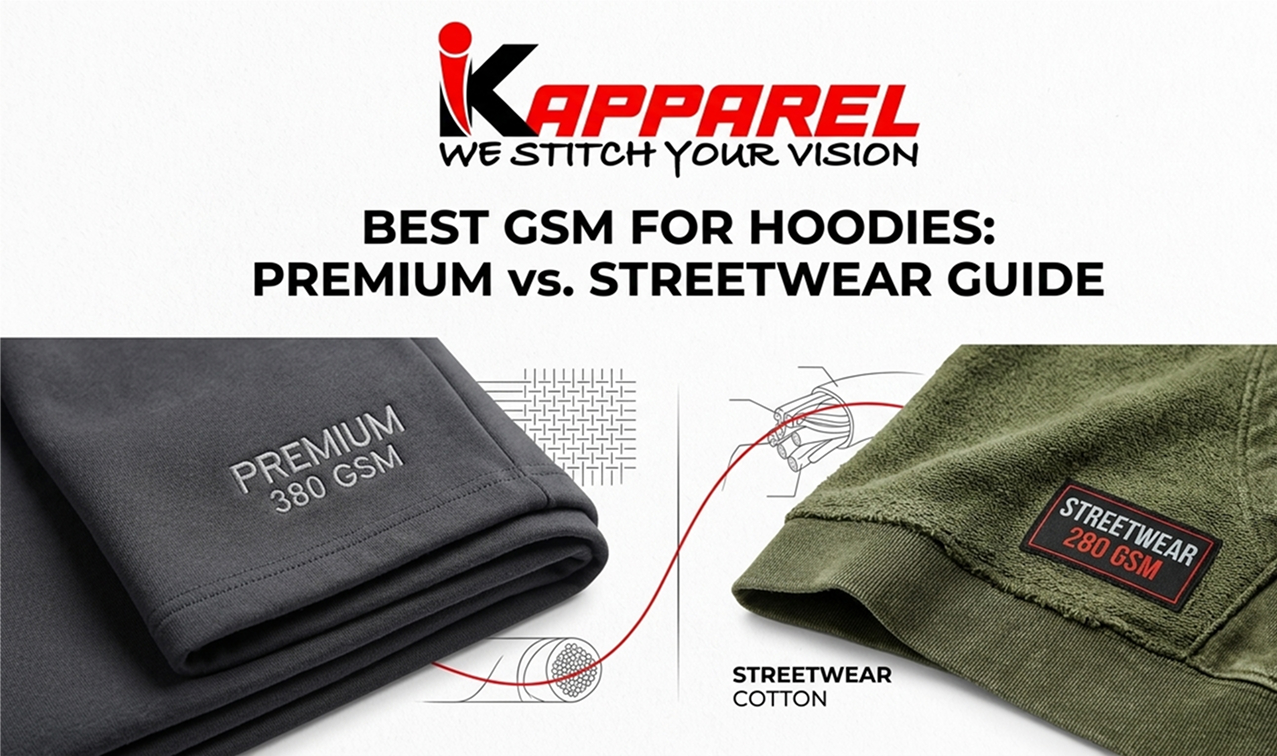
Choosing the best GSM for hoodies is one of the most important decisions when creating a hoodie that feels premium, holds its shape, and matches your brand style. GSM means grams per square meter. It tells you how heavy the fabric is, but it does not tell the full story on its own.
A hoodie can be lightweight, midweight, heavyweight, or ultra-heavyweight depending on the GSM, fabric construction, yarn quality, fleece type, and finishing. For a casual everyday hoodie, a medium GSM may be enough. For a luxury streetwear hoodie with a boxy fit and strong structure, brands usually look for heavier fabric with a dense hand feel.
This guide explains what GSM means, how fabric thickness affects hoodie quality, and what kind of GSM works best for premium and streetwear hoodie production.
Quick Hoodie GSM Comparison.
| GSM | Hoodie Type | Best For |
| 220–280 | Lightweight | Summer & casual wear |
| 300–350 | Midweight | Everyday hoodies |
| 400+ | Heavyweight | Premium streetwear |
What Is GSM in Hoodie Fabric?
GSM stands for grams per square meter. It measures the weight of fabric across one square meter. In simple words, a higher GSM usually means a heavier and thicker fabric, while a lower GSM usually means a lighter fabric.
For hoodies, GSM helps buyers and clothing brands understand how the garment may feel when worn. A 280 GSM hoodie may feel lighter and more flexible. A 400 GSM hoodie may feel heavier, warmer, and more structured. A 500 GSM hoodie may feel very dense and oversized, especially when used for streetwear.
However, hoodie fabric weight is not only about GSM. Two fabrics with the same GSM can feel different if one uses better cotton, tighter knitting, brushed fleece, French terry, or special washing. This is why GSM should be checked together with fabric type, fit, finishing, and intended use.
Why Hoodie GSM Matters
GSM matters because it affects comfort, warmth, durability, shape, and the overall quality impression of the hoodie. When customers touch a hoodie, they often judge quality by weight, softness, thickness, and how well the garment sits on the body.
For premium clothing brands, GSM also affects pricing and brand positioning. A lightweight hoodie may work for basic casualwear, but a premium hoodie needs better structure and a more substantial feel. Streetwear customers often expect hoodies to feel dense, relaxed, and durable. That is why many brands focus on premium hoodie GSM before finalizing production.
GSM also matters for decoration. Screen printing, puff printing, embroidery, patches, and washing treatments may perform differently on different fabric weights. If the hoodie fabric is too thin, heavy embroidery may pull the fabric. If the fabric is too thick, some printing styles may need adjustment.
Key Benefits of Choosing the Right Hoodie GSM
The right GSM helps your hoodie feel suitable for its purpose. A lighter GSM can be good for mild weather, layering, fitness-inspired clothing, or budget-friendly collections. A midweight GSM can work well for everyday wear because it gives comfort without feeling too heavy. A heavyweight GSM can create a more premium look, stronger drape, and better shape retention.
Choosing the correct GSM also improves customer satisfaction. If a brand promises a luxury hoodie but uses fabric that feels too light, customers may feel disappointed. If a hoodie is too heavy for the target market, it may feel uncomfortable for daily wear. The goal is to match GSM with customer expectations, climate, design, and price point.
For brands developing Hoodies and Sweatshirts, GSM should be decided early because it affects pattern making, sizing, stitching, trims, decoration, and final costing.
How Hoodie GSM Works in Product Development
In hoodie production, GSM is usually selected before sampling. The brand decides whether the hoodie should feel light, balanced, heavy, oversized, or luxury. After that, the manufacturer sources suitable fleece, French terry, cotton blend, or custom-knitted fabric.
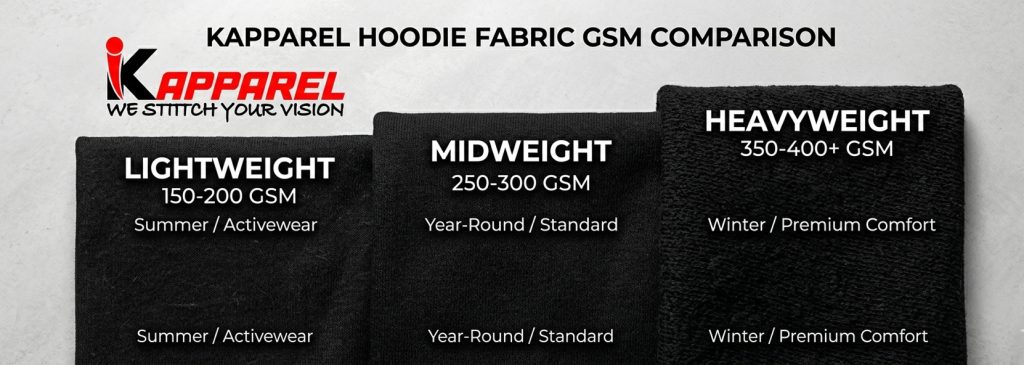
As a general guide, 250 to 300 GSM is usually considered lightweight for hoodies. It can work for warmer climates, layering pieces, or budget-friendly casualwear. Around 320 to 380 GSM is often considered midweight. This range gives a good balance of comfort, warmth, and structure. Around 400 to 500 GSM is commonly used for heavyweight hoodies, especially when the goal is a premium or streetwear feel.
Anything above 500 GSM can feel very heavy and structured. This may work for oversized streetwear, but it is not always the best choice for every brand. A very heavy hoodie costs more, takes longer to dry, and may not suit all climates.
This is why fabric thickness for hoodies should be tested through physical samples. A number on a spec sheet is useful, but the real decision should come from touch, fit, drape, and wear testing.
Premium Hoodie GSM vs. Streetwear Hoodie GSM
Premium hoodies and streetwear hoodies often overlap, but they are not exactly the same. A premium hoodie focuses on refined quality, comfort, clean stitching, soft hand feel, and long-term wear. A streetwear hoodie often focuses more on silhouette, oversized fit, thick fabric, bold graphics, and strong visual impact.
For premium hoodies, many brands prefer a mid-to-heavyweight range, often around 350 to 450 GSM. This gives the hoodie a quality feel without making it too stiff or uncomfortable. For streetwear hoodies, brands may prefer 400 to 500 GSM or higher if they want a boxy, structured, and heavy feel.
The best choice depends on the final design. A zip-up hoodie may not need the same GSM as a pullover hoodie. A cropped hoodie may need a different structure than an oversized drop-shoulder hoodie. A hoodie with puff print or embroidery may need stronger fabric than a plain basic hoodie.
Important Features, Factors, or Considerations
GSM is important, but it should not be selected alone. Fabric composition is equally important. A 100 percent cotton fleece can feel different from a cotton-poly blend. Cotton usually gives a natural, breathable, and premium feel. Polyester can improve durability, shape retention, and cost control. Blends can be useful when the brand wants both comfort and performance.
Fabric construction also matters. Brushed fleece feels soft and warm inside. French terry feels lighter and more breathable. Loopback fabric can be good for premium casualwear. Tightly knitted fleece usually feels more durable and structured.
Fit is another major factor. A slim hoodie in very high GSM may feel restrictive. A boxy hoodie in low GSM may collapse and lose its intended shape. The rib, cuffs, waistband, hood lining, drawcord, and stitching should also match the fabric weight.
If your brand needs a custom fabric direction, Fabric Sourcing & GSM Customization can help align GSM, fabric type, and product goals before production.
Common Mistakes to Avoid
One common mistake is thinking higher GSM always means better quality. A heavy hoodie can still feel poor if the yarn, knitting, stitching, or finishing is weak. Quality comes from the full construction, not only the weight.
Another mistake is choosing GSM without considering the customer. A 700 gsm zip up Hoodie may look premium, but it may feel too hot or too heavy for customers in warmer climates. On the other hand, a 280 GSM hoodie may feel too light for a brand that wants a luxury streetwear image.
Brands also make mistakes when they ignore decoration needs. Heavy embroidery, large patches, puff printing, and screen printing need suitable fabric support. If the GSM is wrong, the final hoodie may not look clean after production or washing.
A final mistake is skipping sample testing. Never decide hoodie GSM from a number alone. Always check the sample after washing, wearing, folding, printing, and measuring shrinkage.
Best Practices for Choosing Hoodie GSM
The best practice is to start with the product purpose. Decide whether the hoodie is for everyday basics, premium blanks, luxury streetwear, sportswear, winter wear, or promotional clothing. After that, choose the GSM range that supports the purpose.
For everyday hoodies, a balanced midweight fabric is often practical. For premium hoodies, choose fabric that feels soft, dense, and stable. For streetwear, focus on structure, drape, and fit. A heavyweight hoodie should hold the body shape without feeling rough or uncomfortable.
It is also smart to test decoration early. If your hoodie will include embroidery, puff print, screen print, or custom labels, the fabric should support those details. A hoodie made for branding needs a fabric that can handle design work without distortion.
How to Choose the Right GSM for Your Hoodie Project
To choose the right GSM, first define your target customer. If your buyer wants a simple everyday hoodie, avoid making it unnecessarily heavy. If your buyer wants premium streetwear, avoid fabric that feels thin or weak.
Next, decide the fit. Oversized hoodies usually need more structure, so a heavier GSM can help. Regular-fit hoodies can work well with midweight fabric. Cropped hoodies may need careful testing because fabric weight affects how the garment sits on the body.
Then consider branding and production style. If you are starting with ready-made blanks, Blank Hoodies can be useful for faster development. If you need a fully custom silhouette, fabric, measurements, panels, and finishing, Cut & Sew Customization gives more control over the final hoodie.
For most premium clothing projects, the safest starting point is often a strong mid-to-heavyweight fabric. It gives a better feel than basic lightweight fleece but remains wearable for a wider audience. For true streetwear collections, heavier GSM can work well when the fit, pattern, stitching, and finishing are designed around that fabric weight.
Final Thoughts
The good GSM for hoodies is not one fixed number. It depends on the hoodie’s purpose, fit, fabric type, decoration, climate, and brand positioning. A premium hoodie should feel comfortable, stable, and well-made. A streetwear hoodie should also have the right structure, weight, and shape.
If you want a Basic Hoodie, a midweight GSM can be enough. If you want a premium or Streetwear Hoodie, a heavier GSM may create a stronger impression. The smartest approach is to test fabric samples, check shrinkage, review decoration compatibility, and match the GSM with your customer’s expectations.
When GSM is selected properly, the hoodie feels better, looks better, and supports the brand image more effectively.
Ready to Launch Your Premium Streetwear Collection?
Frequently Asked Questions About Hoodie GSM
What is the best GSM for hoodies?
The best GSM for hoodies depends on the purpose. For everyday hoodies, around 320 to 380 GSM is often a practical range. For premium or streetwear hoodies, many brands prefer around 400 to 500 GSM for a heavier and more structured feel.
Is 400 GSM good for a hoodie?
Yes, 400 GSM is generally a strong choice for a premium hoodie. It usually feels heavier than basic fleece and gives better structure. The final quality still depends on fabric type, stitching, fit, and finishing.
Is heavier GSM always better?
No, heavier GSM is not always better. A very heavy hoodie may feel too warm, stiff, or costly for some customers. The best hoodie uses the right GSM for its design, climate, price, and target audience.
What GSM do streetwear hoodies use?
Streetwear hoodies often use heavier fabric because the style usually needs structure and a strong silhouette. Many streetwear hoodies fall around 400 to 500 GSM, but some oversized designs may go higher depending on the brand’s look.
Is 300 GSM too thin for a hoodie?
300 GSM is not always too thin. It can work for lightweight hoodies, layering, warmer weather, or budget-friendly collections. For a premium streetwear hoodie, however, 300 GSM may feel lighter than expected.
5 thoughts on “Best GSM for Hoodies: Premium vs. Streetwear Guide”