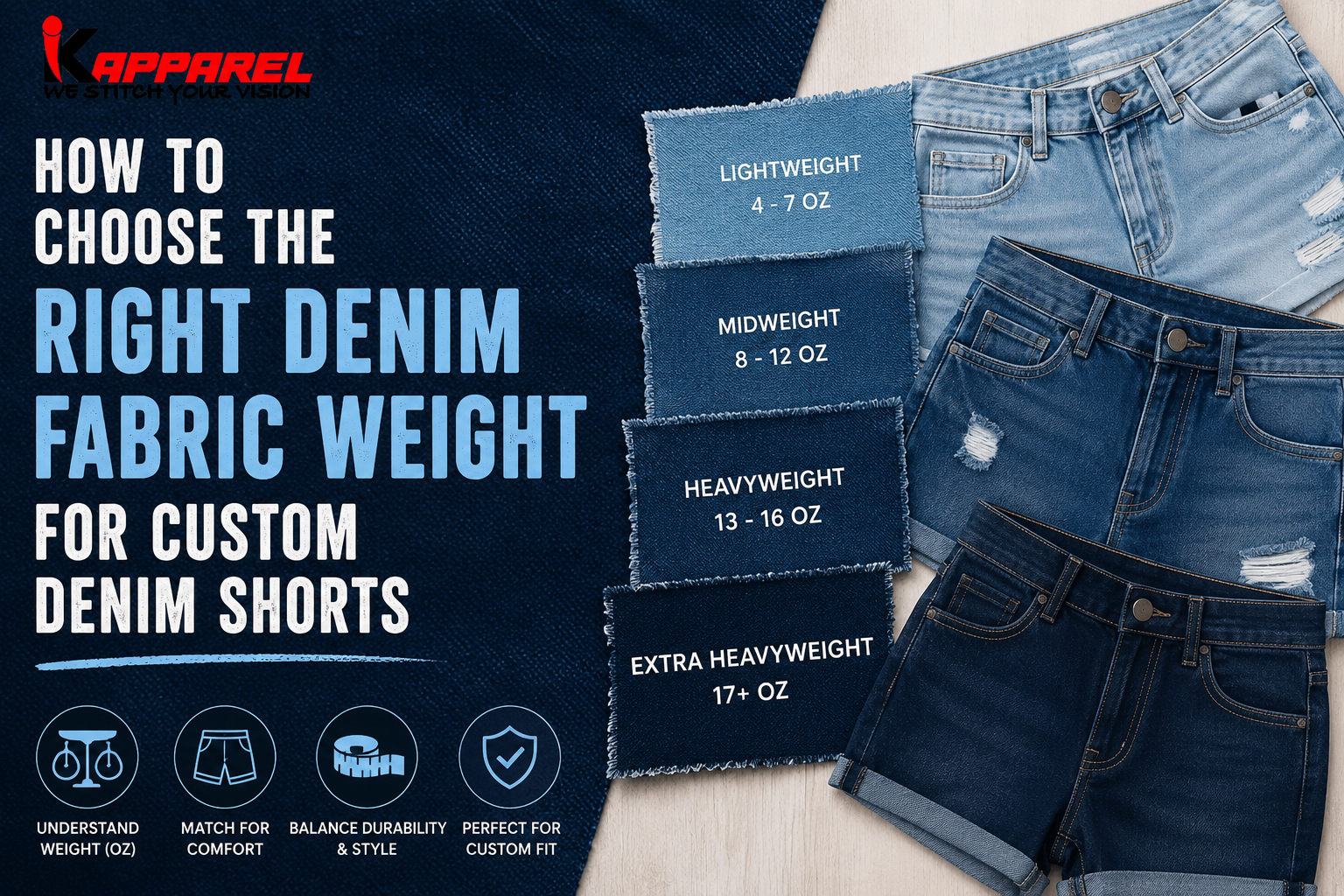
Picking the right denim weight is one of those details that can make or break a pair of custom shorts. Too heavy, and your shorts feel stiff and hot the moment summer hits. Too light, and they lose shape after a few washes. If you’re sourcing custom denim shorts for a clothing brand, a retail line, or a private label collection in the United States, understanding denim weight in ounces (oz) is one of the most practical things you can learn before placing a bulk order.
This guide breaks down what denim weight actually means, how stretch and rigid fabrics behave differently, and which oz range works best for warm-weather wear across the U.S. market, whether you’re shipping to customers in Arizona, Florida, Texas, or anywhere else where summer heat is a real factor.
What Is Denim Weight (Ounces) and Why It Matters
Denim weight is measured in ounces per square yard, usually written as “oz” on fabric spec sheets. This number tells you how much a one-yard by one-yard piece of the fabric weighs. It’s a simple number, but it tells you a lot about how the fabric will feel, move, and hold up over time.
Lightweight denim generally falls between 4 oz and 8 oz. Mid-weight denim sits between 9 oz and 13 oz. Heavyweight denim starts around 14 oz and can go up to 20 oz or more for workwear-style jeans and jackets.
For custom denim shorts specifically, weight decides three things buyers care about most: comfort in hot weather, how the fabric holds a crease or shape, and how the finished product looks after distressing, washing, or garment dye treatments.
Why Denim Weight Matters for Custom Shorts Brands
If you’re building a private label denim line or ordering custom shorts for a retail brand, denim weight isn’t just a comfort detail it’s a business decision. The wrong weight can lead to returns, complaints about heat and comfort, or shorts that don’t hold their shape on the shelf.
U.S. shoppers, especially younger buyers shopping online, are used to reading detailed product descriptions before they buy. Listing the denim weight (for example, “6.5 oz stretch denim” or “10 oz rigid denim”) builds trust and reduces returns, because customers know exactly what they’re getting.
Denim weight also affects cost. Heavier denim uses more raw material, which raises the per-unit price. If you’re working with a tight per-unit budget for a large U.S. retail order, weight is one of the first specs your manufacturer will ask about.
Key Benefits of Denim Fabric Weight For Custom Shorts
- Getting the weight right early in the design process saves time, money, and rework later. A few of the biggest advantages:
- Better comfort for summer collections. Lightweight and mid-weight denim breathes better and doesn’t trap heat, which matters for customers in hot U.S. states.
- Lower shipping and production costs. Lighter fabric weighs less per unit, which can reduce freight costs on large U.S. import orders.
- More consistent fit after washing. The right weight-to-stretch ratio keeps shorts from sagging or losing shape after repeated washes, which protects your brand’s reputation for quality.
- Fewer returns and complaints. Matching weight to season and use case (casual wear, workwear, fashion-forward distressed styles) reduces the chance of unhappy customers.
- Better wash and distressing results. Some finishes, like acid wash or vintage wash, show up more clearly on certain weights, which matters if your brand’s aesthetic depends on that look.
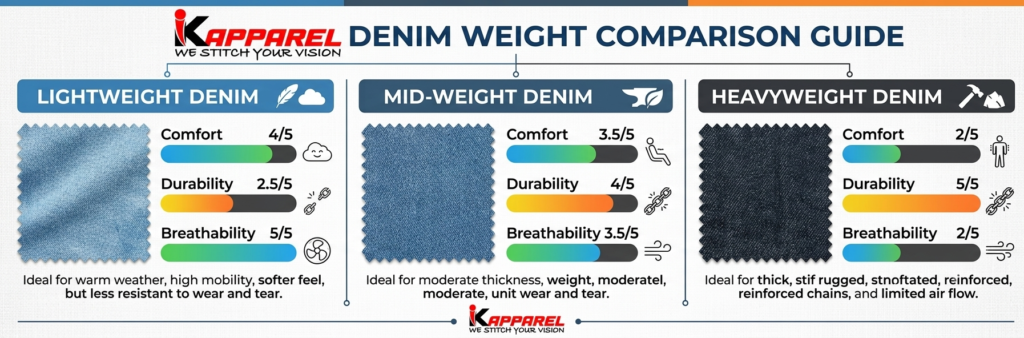
Denim Weight Comparison Table
Here’s a quick reference table that breaks down denim weight categories, their best use cases, and how they perform for custom denim shorts.
| Denim Weight | Feel & Weight | Best For | Stretch Compatibility | Ideal Season |
|---|---|---|---|---|
| 4-6 oz (Lightweight) | Soft, thin, breathable | Casual summer shorts, fashion shorts | Works very well with stretch blends | Summer, hot climates |
| 7-9 oz (Light-Mid) | Light but slightly more structured | Everyday casual shorts, women’s fashion shorts | Good with stretch, holds shape decently | Spring through summer |
| 9-13 oz (Mid-weight) | Balanced structure and comfort | Classic denim shorts, unisex styles | Works with both rigid and stretch | Year-round, mild climates |
| 14-16 oz (Heavyweight) | Thick, sturdy, structured | Workwear-style shorts, durable streetwear | Usually rigid, minimal stretch | Fall, cooler regions |
| 17-20+ oz (Extra Heavy) | Very stiff, raw denim feel | Premium raw denim shorts, heritage brands | Almost always rigid | Cooler climates, layered looks |
For most custom denim shorts brands targeting the U.S. summer market, the 6 oz to 10 oz range is the sweet spot. It's light enough to stay comfortable in the heat but still holds enough structure to look intentional, not flimsy.How Denim Weight Works With Stretch vs. Rigid Fabric
Denim weight and stretch content work together, not separately. A 7 oz denim with 2 percent elastane will feel completely different from a 7 oz denim that’s 100 percent cotton (rigid).
Stretch denim contains elastane or spandex blended with cotton. It moves with the body, which makes it popular for fitted or athletic-cut shorts. Stretch denim in lighter weights (4 oz to 9 oz) is one of the most requested options for U.S. summer collections because it combines comfort with a body-hugging fit.
Rigid denim is 100 percent cotton with no stretch fibers. It’s stiffer at first but breaks in and molds to the body over time, which is why many premium and heritage denim brands in the U.S. still prefer rigid fabric for a more authentic look. Rigid denim tends to hold distressing, whiskering, and fading better than stretch blends, since the stretch fibers can interfere with how the fabric ages.
For custom denim shorts, a lot of successful U.S. brands use a light-to-mid weight rigid denim (8 oz to 11 oz) when the goal is a vintage or heritage look, and a lightweight stretch denim (4 oz to 7 oz) when the goal is comfort-first, athletic, or everyday casual wear.
Important Factors to Consider Before Choosing a Denim Weight
A few practical things to check before finalizing your fabric weight for a custom shorts order:
Climate and target region. If you’re selling primarily to warm-weather U.S. states like Florida, California, Texas, or Arizona, lighter weights in the 4 oz to 9 oz range usually perform better in customer reviews.
Wash and finish plans. Acid wash Shorts, vintage wash, and garment dye treatments behave differently depending on weight. Heavier denim holds contrast better; lighter denim fades faster and gets that broken-in look sooner.
Cut and silhouette. Bermuda shorts and looser silhouettes can carry mid-weight denim well, while fitted or cropped shorts often look better in a lighter, more flexible fabric.
Order volume and cost. Heavier denim costs more per yard, which adds up quickly on large private label orders. Confirm your target retail price point before locking in a weight.
Manufacturer capability. Not every factory processes every weight the same way. Ask your manufacturer which weights they specialize in and request swatches before committing to a bulk order.
Common Mistakes Brands Make When Choosing Denim Weight
Choosing heavyweight denim for a summer-only collection. This is one of the most frequent mistakes new denim brands make. Heavier denim (14 oz+) can feel too hot and stiff for shorts meant for warm weather.
Ignoring stretch percentage. Ordering “stretch denim” without confirming the elastane percentage can lead to shorts that lose their shape quickly or feel too tight after a few wears.
Skipping a wash test. Some denim weights shrink or change texture noticeably after the first wash. Always request a washed sample, not just a raw fabric swatch.
Not matching weight to the finish. Requesting a heavy distressed or acid wash finish on a very lightweight fabric can sometimes weaken the fabric structure too much, leading to tearing.
Choosing weight based on price alone. The cheapest fabric option isn’t always the best fit for the intended use case. A slightly higher cost per yard can mean far fewer returns and complaints.
Best Practices for Choosing Denim Weight for Custom Shorts
Start with your use case, not the fabric. Decide whether the shorts are casual summer wear, workwear-inspired, or premium fashion, then match the weight to that purpose.
Request physical swatches before bulk production. Photos and spec sheets don’t always show how a fabric feels or drapes.
Test one sample batch first. Before committing to a full production run, order a small batch in your chosen weight and wash it the way a customer would, then check shrinkage, texture, and fit.
Work with an experienced apparel manufacturer. A manufacturer like IKapparel, which specializes in fabric sourcing, GSM customization, and cut and sew customization, can help you match the right weight and stretch ratio to your brand’s specific style and target market before you commit to a full production order.
Confirm labeling for U.S. retail. If you’re selling in U.S. stores or online marketplaces, make sure your labels or product descriptions clearly state the fabric composition and weight, since many U.S. shoppers now check this before buying.
How to Choose the Right Denim Weight for Your Brand
If you’re still deciding, here’s a simple way to narrow it down. First, define your season. Summer-focused shorts brands should lean toward 4 oz to 9 oz denim. Year-round or transitional collections do well in 9 oz to 13 oz. Fall-forward or workwear-inspired lines can go heavier, from 14 oz up.
Second, decide on stretch vs. rigid based on your fit goals. Stretch works best for fitted, athletic, or comfort-first cuts. Rigid works best for vintage, heritage, or structured silhouettes.
Third, factor in your finish. If your brand is known for heavy distressing or acid wash effects, test how your chosen weight holds up to that specific finish before finalizing bulk orders.
Finally, partner with a manufacturer that understands the U.S. market’s expectations around comfort, sizing, and durability. A company like IKapparel offers fabric sourcing and GSM customization services specifically so brands don’t have to guess at these decisions alone, along with cut and sew customization, design review, and repair support to fine-tune fit before mass production.
Frequently Asked Questions About Denim Weight for Custom Shorts
What is the best denim weight for summer shorts?
Most U.S. brands find that 4 oz to 9 oz denim works best for summer shorts. It’s lightweight, breathable, and comfortable in hot weather while still holding enough structure for a clean finished look.
Is stretch denim better than rigid denim for shorts?
It depends on the fit you want. Stretch denim is better for fitted, athletic, or comfort-focused shorts, while rigid denim is better for a structured, vintage, or heritage look that holds distressing and fading well.
Does heavier denim mean better quality?
Not necessarily. Heavier denim is more durable and sturdy, but for shorts, especially summer styles, a well-made lightweight or mid-weight denim can be just as high quality and more comfortable to wear.
How much does denim shrink after washing?
Shrinkage varies by weight and fabric blend, but most cotton-heavy denim shrinks somewhere between 2 and 5 percent after the first wash. This is why requesting a pre-washed sample before bulk production is so important.
What denim weight is best for a private label shorts brand?
For most private label brands targeting the U.S. market, a 6 oz to 10 oz stretch or rigid denim offers the best balance of comfort, durability, and cost, though the exact choice should match your brand’s specific style and target season.
Final Thoughts
Choosing the right denim weight for custom shorts comes down to matching the fabric to your brand’s purpose, your customer’s climate, and the finish you want to achieve. For most U.S. summer-focused denim shorts brands, lightweight to mid-weight denim in the 4 oz to 10 oz range, paired with the right amount of stretch, delivers the best combination of comfort and durability.
If you’re planning a custom denim Apparel line and want expert guidance on fabric weight, stretch ratios, or GSM customization, working with an experienced manufacturer takes the guesswork out of the process. IKapparel supports U.S. based brands with fabric sourcing, cut-and-sew customization, and full private label production, helping you land on the right denim weight before you commit to a bulk order.
1 thought on “How to Choose the Right Denim Fabric Weight for Custom Denim Shorts”