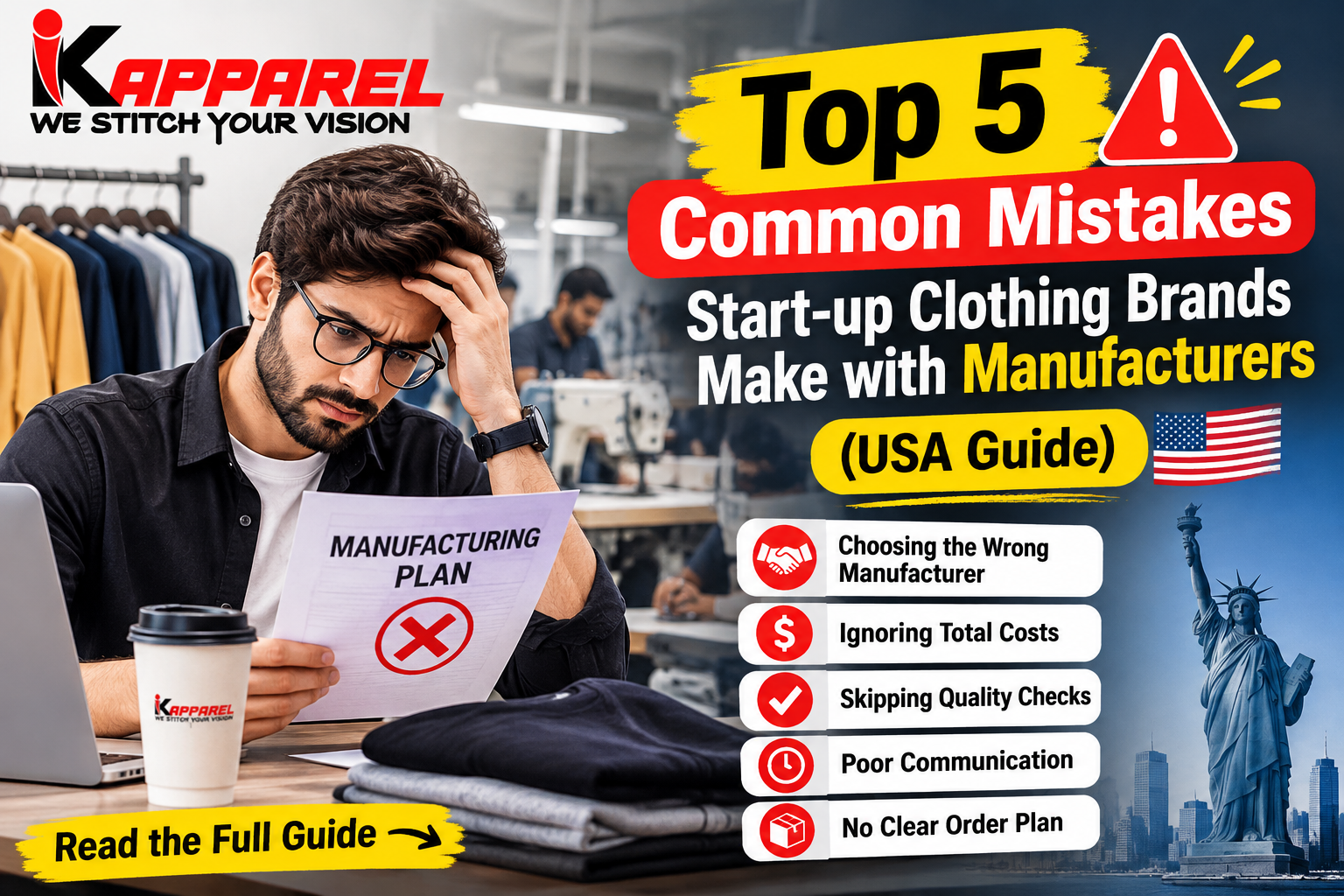
Why Most Start-up Clothing Brands in the USA Struggle with Manufacturers
Launching a clothing line in the USA is easier than it has ever been. You can design a collection, build a Shopify store, and run ads in a few weeks. The hard part starts when you hand your idea to a factory.
Many of the mistakes start-up clothing brands make with manufacturers have nothing to do with bad design. They come from missed details. A vague email, an incomplete tech pack, a fabric listed only as “heavy cotton,” or a launch date that leaves no room for sampling can turn a good collection into a pile of returns.
This guide covers the five most common problems we see with USA-based start-ups: communication gaps, unclear tech packs, ignored fabric specs, poor production planning, and skipped sample approvals. Each section explains what goes wrong, why it hurts, and how to fix it before you place your first order.
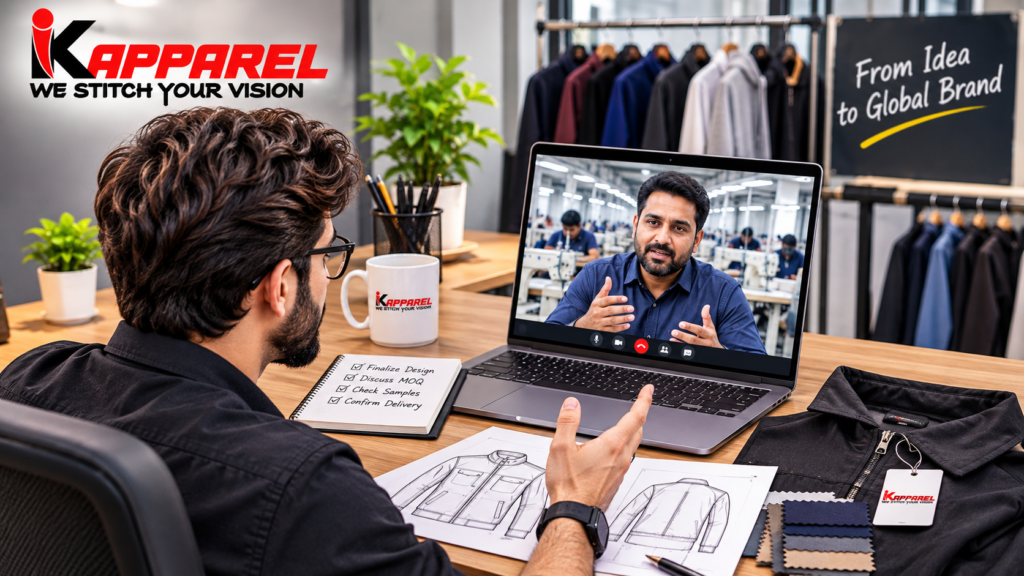
What Does “Working with a Clothing Manufacturer” Actually Involve?
Working with a clothing manufacturer means more than sending a logo and getting a hoodie back. A typical project moves through design, tech pack creation, fabric selection, sampling, revisions, bulk production, quality checks, and shipping.
For a USA brand, there are extra steps. You may need to plan for US size standards, labels that meet American requirements, customs and freight timing, and delivery to a US warehouse or fulfillment center. Every one of these steps needs clear information from you. When information is missing, the factory fills in the blanks, and their guess may not match your vision.
Why These Mistakes Matter for USA Start-ups
A new brand usually has a small budget and one shot at a good first impression. A weak first drop can lead to bad reviews, refund requests, and unsold inventory, and a small brand has little cash to absorb that.
Timing is also tighter in the US market. Seasonal drops, Black Friday, holiday gifting, back-to-school, and spring launches all have firm dates. If production slips by three weeks, you may miss the selling window entirely.
The Top 5 Mistakes at a Glance
| Mistake | What It Looks Like | Typical Result |
|---|---|---|
| 1. Communication Gaps | Vague emails, scattered messages, and no written approvals. | Wrong colors, wrong trims, and repeated revisions. |
| 2. Unclear Tech Pack | Missing measurements, stitch details, or construction instructions. | Poor fit and inconsistent sizing across the batch. |
| 3. Ignoring Fabric Specs | Choosing fabric by name or photo only. | Wrong weight, shrinkage, pilling, and incorrect fabric feel. |
| 4. Poor Production Planning | No buffer for samples, shipping, or unexpected delays. | Missed launch dates and rushed product quality. |
| 5. Skipping Sample Approval and Compliance Checks | Approving bulk production without testing and approving a sample. | Defective bulk orders and labeling problems. |
Mistake 1: Communication Gaps with Your Manufacturer
This is the most common problem, and it causes many of the others. Start-ups often explain their idea through quick chats, voice notes, or screenshots. The factory then works from a half-understood request.
What goes wrong:
- Instructions are spread across email, WhatsApp, and Instagram messages, so nobody knows which version is final.
- The brand assumes the factory understands US fit preferences, such as a boxy streetwear fit versus a classic fit.
- Changes are agreed on a call but never written down.
- Time zones cause delays. A question sent from the USA in the afternoon may not be answered until the next day.
How to fix it:
- Keep one main channel for approvals, usually email, and confirm every decision in writing.
- Use a simple project sheet with style names, colors, quantities, and deadlines.
- Name one person on your team as the contact for the factory.
- Ask the manufacturer to repeat back the key details so you can catch misunderstandings early.
A good manufacturer will ask questions. If a factory says yes to everything without asking anything, that is a warning sign.
Mistake 2: Sending an Unclear or Incomplete Tech Pack
A tech pack is the instruction manual for your garment. It tells the factory exactly how to cut, sew, finish, and label every piece. Without it, the factory relies on interpretation, and no two people interpret a sketch the same way.
Many start-ups send only a mockup or a Pinterest image. A picture shows what the garment looks like, but it does not show seam types, hem depth, pocket placement, or tolerance for measurements.
What a solid tech pack should include:
| Tech Pack Section | What to Include |
|---|---|
| Flat Sketches | Front, back, and side views with clear lines. |
| Measurement Chart | Points of measure for each size, with tolerances. |
| Construction Details | Stitch type, seam finish, hem, neckline, and cuffs. |
| Fabric and Trim List | Fabric name, weight, color, zippers, drawcords, and buttons. |
| Artwork and Placement | Print or embroidery size, position, and colors. |
| Labels and Packaging | Woven labels, care labels, hang tags, and polybag instructions. |
| Colorways | Color codes or approved lab dips. |
If your tech pack has gaps, a professional review can catch them early. IKapparel offers a Design Review and Repair service that checks files and details before production starts.
Tip for USA brands: Decide whether your measurements are in inches or centimeters and state it clearly. Most US customers expect standard sizes such as S, M, L, XL, and your size chart should match what you publish on your website.
Mistake 3: Ignoring Fabric Specs
Fabric decides how a garment feels, fits, washes, and lasts. Still, many new brands describe fabric in broad terms like “soft cotton” or “thick fleece.” Those words mean different things to different suppliers.
The details that matter:
- Fabric composition, such as 100 percent cotton or a cotton and polyester blend
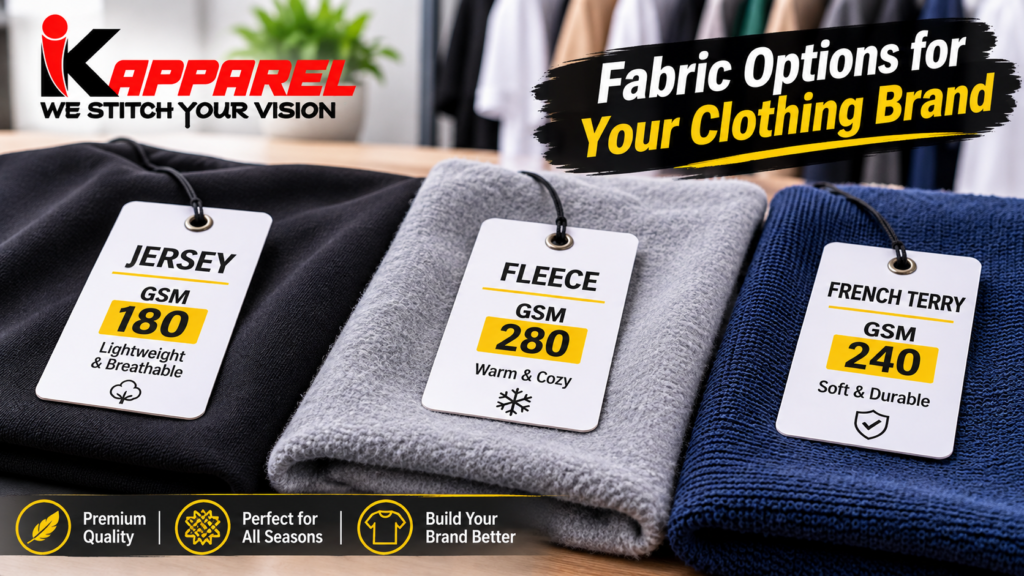
- Fabric weight, usually shown in GSM (grams per square meter). US customers often hear weight in ounces per square yard, so ask your manufacturer to confirm both if needed
- Fabric construction, such as jersey, fleece, French terry, or twill
- Finish and treatment, such as brushed, pre-shrunk, garment washed, or acid washed
- Shrinkage and colorfastness expectations
| Fabric Spec | Why It Matters | What to Ask the Factory |
|---|---|---|
| Composition | Affects feel, stretch, breathability, and care. | What is the exact fiber content? |
| GSM or Weight | Decides how heavy or light the garment feels. | What is the GSM, and can I see a swatch? |
| Fabric Type | Changes drape and structure. | Is it fleece, French terry, or jersey? |
| Shrinkage | Affects fit after washing. | Is the fabric pre-shrunk or washed? |
| Color and Dye Method | Affects fading and consistency. | Can I approve a color swatch first? |
Example: A brand wants a premium heavyweight hoodie for the US streetwear market but only writes “thick fleece.” The factory uses a mid-weight fabric because it fits the price. The hoodie looks right in photos but feels thin in hand, and customers notice immediately.
If you are unsure what weight or fabric suits your product, you can work through it with a team that offers Fabric Sourcing and GSM Customization.
Mistake 4: Poor Production Planning
Production planning is where many start-ups lose control of their launch. They count back from the launch date and assume everything will run on time. In practice, sampling, revisions, fabric sourcing, bulk production, and international shipping all take time and often overlap badly.
Common planning errors:
- Skipping buffer time for sample revisions
- Ordering too late for a seasonal drop
- Forgetting freight and customs clearance time for US delivery
- Ordering quantities that do not match cash flow
- Changing designs after production has started
Sample timeline for planning purposes (actual timing depends on the style, factory, and season, so confirm with your manufacturer):
| Stage | What Happens | Planning Note |
|---|---|---|
| Design and Tech Pack | Finalize sketches, measurements, and artwork. | Do not rush this step. |
| Fabric and Trim Approval | Review swatches, colors, and labels. | Approve in writing. |
| Sampling | First sample, fit check, and revisions. | Plan for more than one round. |
| Bulk Production | Cutting, sewing, decoration, and finishing. | Confirm start and finish dates. |
| Quality Check | Inspect measurements, stitching, and prints. | Check before shipping. |
| Shipping and Delivery | Freight, customs, and delivery to US address. | Add extra days for delays. |
Smart approach for new USA brands: Start with a small first order of core styles. Test demand, collect customer feedback on fit and quality, then scale.Mistake 5: Skipping Sample Approval and Compliance Details
Some start-ups, eager to save time, approve bulk production without a proper sample, or from a sample that did not match the final fabric. This can lead to a full batch with the same flaw repeated hundreds of times.
What to check on a sample:
- Measurements against your size chart
- Fabric weight and feel
- Print or embroidery placement, size, and color
- Stitch quality and seam strength
- Label placement and neck label quality
- Wash test results if possible
USA labeling reminder: Garments sold in the USA generally need correct fiber content, country of origin, and care labeling, and children’s products have additional safety rules. Requirements can change by product type, so always check current guidance from the relevant US agencies or a compliance professional before you print your labels. A manufacturer that offers Custom Labels and Tags can help you produce labels with the right information.
Best Practices for Working with a Clothing Manufacturer
- Build a complete tech pack before requesting quotes.
- Request fabric swatches and confirm GSM in writing.
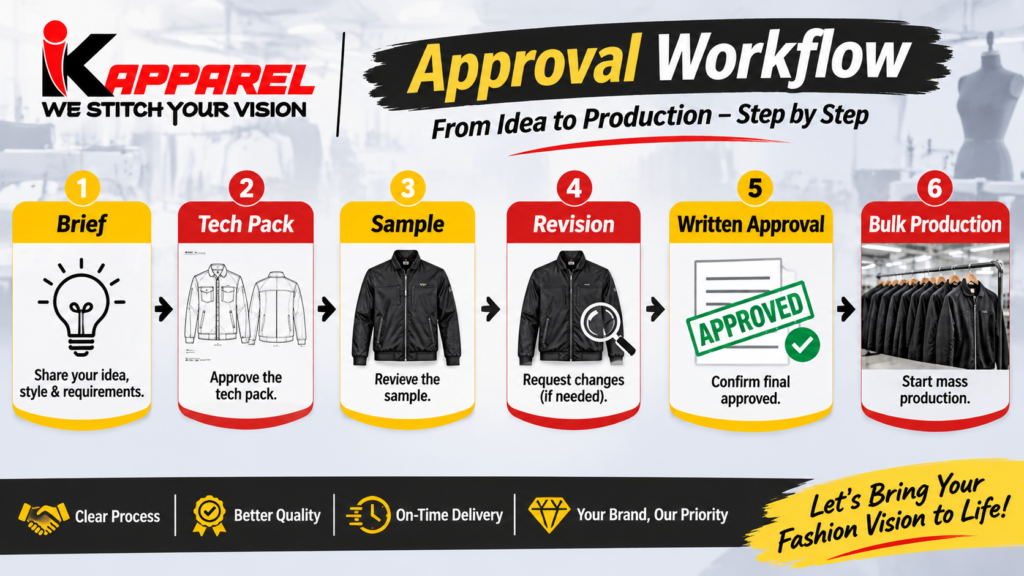
- Approve at least one pre-production sample.
- Keep all approvals and changes in one written thread.
- Order a smaller test run before scaling.
- Add buffer time to every stage, especially shipping to the USA.
- Ask the factory for their minimum order quantity, lead time, and sampling policy up front.
How to Choose the Right Clothing Manufacturer for Your USA Brand
Not every factory suits every start-up. Use the checklist below when comparing options.
| What to Check | Why It Matters |
|---|---|
| Experience with Start-ups | They understand small orders and first-time questions. |
| Clear Minimum Order Quantities | Helps you plan cash flow. |
| Sampling Process | Shows how seriously they treat quality. |
| Communication Speed and Clarity | Reduces delays and mistakes. |
| Customization Range | Printing, embroidery, labels, trims, and packaging under one roof. |
| Experience Shipping to the USA | Smoother freight and delivery planning. |
| Private Label Support | Helps you build your own brand identity. |
If you want to build your own brand from the ground up, a private label clothing service is a practical starting point:
For brands creating original shapes and fits, Cut and Sew Customization is another option to explore.
Frequently Asked Questions About Working with Clothing Manufacturers
What is the biggest mistake start-up clothing brands make with manufacturers?
The most common mistake is unclear communication. When instructions are vague or scattered, the factory has to guess, and guesses lead to wrong fits, colors, or materials. A written brief and a complete tech pack prevent most of these problems.
Do I really need a tech pack before contacting a manufacturer?
It is strongly recommended. A tech pack allows accurate quotes and consistent production. Some manufacturers offer design review support, but arriving with a clear draft saves time and money.
How do I choose the right fabric for my USA clothing brand?
Start with your product type and target customer. A premium hoodie, a lightweight tee, and a performance top each need different fabrics. Ask for swatches, confirm GSM and composition, and test a sample before you approve bulk.
How long does it take to produce a clothing line?
It depends on style complexity, fabric availability, sampling rounds, and shipping method. Plan for more than one sample round and extra time for international freight to the USA. Ask your manufacturer for a written timeline.
Should a new brand start with a small first order?
In most cases, yes. A smaller run lets you test fit, quality, and customer demand without tying up all your cash. You can then reorder winning styles with more confidence.
Final Thoughts: Build a Stronger Brand by Avoiding These Mistakes
The five mistakes above are all fixable. Clear communication, a complete tech pack, detailed fabric specs, realistic production planning, and careful sample approval protect your budget and your brand reputation. For USA start-ups, they also help you hit seasonal selling windows with products your customers will want to wear again.
IKapparel works with start-up and growing clothing brands that need custom apparel, private label production, fabric guidance, and decoration services. If you are planning your first collection for the USA market, talk to the IKapparel team about your designs, fabrics, and timeline before you commit to production.