If you’ve ever picked up a hoodie with a faded, cloud-like wash pattern or a distressed vintage look, you’ve seen the results of acid wash and garment dyeing. These techniques are now a staple in the USA streetwear and fashion market, especially for brands that want their hoodies to look worn-in, unique, and premium right off the rack.
For USA-based clothing brands, startups, and streetwear labels, understanding how custom acid wash and garment dye hoodies actually work is important before placing a bulk order. Here’s a simple breakdown of the process, from start to finish.
WHAT IS ACID WASH AND GARMENT DYEING?
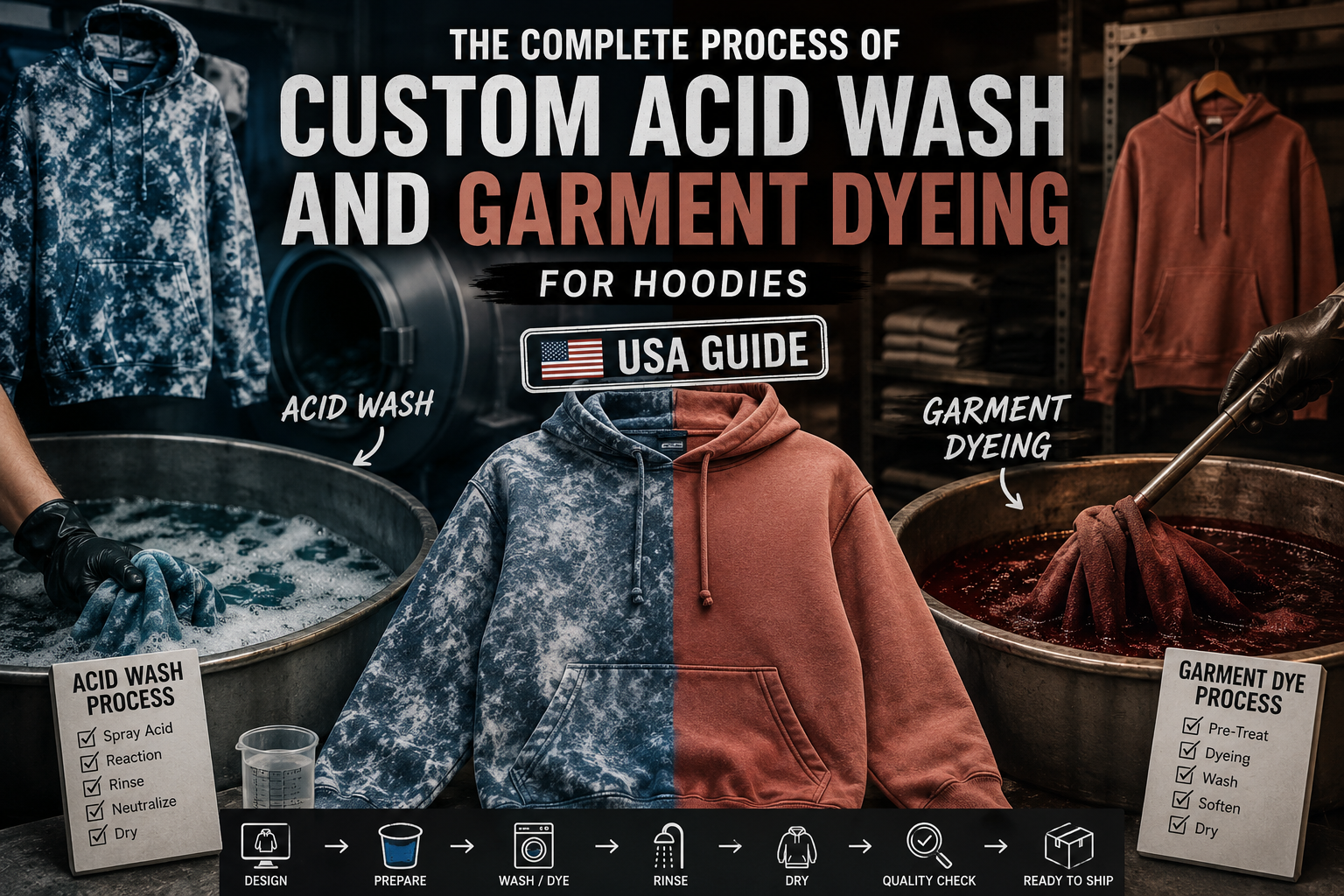
Acid wash is a distressing technique where hoodies are washed with chlorine-soaked pumice stones or bleach solutions, creating a mottled, faded pattern on the fabric. Garment dyeing is different: it’s when a fully finished hoodie (already sewn and constructed) is dyed as a single piece, rather than dyeing the fabric before cutting and sewing.
Both fall under the broader “vintage wash” category, which is very popular right now among USA streetwear brands, private label startups, and college merchandise lines. The goal is a soft, broken-in feel with a one-of-a-kind color pattern.
Quick differences:
- Acid wash: marbled, faded, high-contrast look using bleach or stones
- Garment dye: soft, uniform color with a slightly irregular vintage tone
- Vintage wash: a milder version of acid wash, often paired with enzyme softening
- Tie-dye wash: fabric is folded and tied before dyeing for pattern control
- Stone wash: stones alone, no bleach, for texture without heavy fading
WHY IT MATTERS FOR USA BRANDS
The USA apparel market has shifted heavily toward streetwear, athleisure, and vintage-inspired fashion. Customers expect character in their clothing, not flat, uniform colors. A well-done wash job turns a basic blank hoodie into a premium product that supports a higher retail price.
Why USA brands care about this: Custom acid wash and garment dyeing for hoodies
- It creates differentiation on shelves and online stores
- Customers associate vintage wash finishes with quality
- Acid wash and tie-dye styles consistently sell well in USA streetwear and college markets
- Garment dyeing allows smaller, more flexible color test runs

HOW THE PROCESS WORKS, STEP BY STEP
- Blank construction: the hoodie is cut and sewn first, in raw or light base color
- Pre-treatment: sizing agents and oils are removed so dye/bleach absorbs evenly
- Wash or dye bath: for acid wash hoodies, tumble with chemical-soaked pumice stones; for garment dye, the whole hoodie is submerged in a dye bath
- Rinsing and neutralizing: multiple rinses stop the chemical reaction and protect fabric strength
- Softening/enzyme treatment: gives that soft, broken-in feel
- Drying and quality check: checked for color consistency, shrinkage, and even wash
- Finishing and packaging: tagging, folding, and custom packaging before shipping
Hoodie Wash Type Comparison Guide
| Wash Type | Look | Best For | Recommended Fabric |
|---|---|---|---|
| Acid Wash | Marbled, high-contrast fade | Streetwear collections, USA college merchandise | Heavy cotton fleece |
| Garment Dye | Soft, uniform vintage tone | Minimalist streetwear, everyday basics | Cotton or cotton-poly blend |
| Stone Wash | Light texture with a subtle faded effect | Denim-inspired hoodies and casual wear | Heavy cotton twill or fleece |
| Tie-Dye Wash | Unique patterned and colorful sections | Festival wear, fashion drops, limited editions | Cotton fleece |
| Enzyme Wash | Ultra-soft feel with minimal fading | Everyday comfort hoodies and premium basics | Light to mid-weight cotton |
THINGS TO CHECK BEFORE ORDERING
- Fabric Sourcing & GSM Customization affect how the wash pattern turns out
- Some color variation between units is normal, not a defect
- Wash processes usually need higher minimum order quantities than plain printing
- Expect slight shrinkage after washing/dyeing
- Cotton-heavy fabrics take dye and wash better than synthetic-heavy blends
COMMON MISTAKES TO AVOID
Expecting perfectly identical color on every unit is a common mistake; natural variation is part of the look. Choosing a synthetic-heavy fabric is another, since it absorbs dye poorly. Skipping a sample run before a bulk order is the biggest one, since results can shift based on fabric batch and drum load size.
BEST PRACTICES
- Always request a sample before a full bulk order
- Use mid-to-heavyweight cotton fleece, around 280-400 GSM
- Work with a manufacturer that handles both dyeing and washing in-house
- Ask about USA-based warehousing if you’re selling to USA customers
- Plan colors around current USA streetwear and hoodies trends like washed greys and muted tones

CHOOSING A MANUFACTURING PARTNER
Look for a manufacturer with in-house garment dye and acid wash capability rather than outsourcing, since it usually means better quality control. IKapparel is one option serving USA brands with garment dye, acid wash, and vintage wash production, along with screen printing, embroidery, DTF printing, and private label support all under one roof.
Ask any manufacturer about minimum order quantities, average turnaround, fabric sourcing, and whether they offer samples before bulk production.
What’s the difference between acid wash and garment dye hoodies?
Acid wash uses bleach or chemical-soaked stones for a marbled, faded pattern. Garment dye submerges the finished hoodie in a dye bath for a more uniform color.
Is acid wash bad for fabric?
Done properly with correct neutralizing and rinsing, it doesn’t significantly weaken fabric. Poor process control can cause thinning over time.
How long does production take?
Longer than standard blank hoodie orders, since wash and drying stages add extra time.
Can I get a sample first?
Yes, most manufacturers, including IKapparel, offer sample production before a full run.
What fabric works best?
Heavyweight cotton fleece, around 280-400 GSM, holds wash and dye treatments better than synthetic blends.
FINAL THOUGHTS
Custom acid wash and garment dyeing give USA hoodie brands a way to stand out in a crowded streetwear market. The process takes a finished hoodie through washing, dyeing, neutralizing, and finishing to create that soft, vintage look customers keep responding to. If you’re a USA-based brand planning your next hoodie drop, working with a manufacturer like IKapparel that understands both the wash process and current market trends is a smart place to start.
1 thought on “THE COMPLETE PROCESS OF CUSTOM ACID WASH AND GARMENT DYEING FOR HOODIES (USA GUIDE)”